Address:
202,101, No. 3, Kaifa Road, Dalong Street ,Panyu District, Guangzhou, Guangdong Focus On Polymer New Molding Equipment


WHAT ARE YOU LOOKING FOR?




Choosing a lab extruder manufacturer starts with a practical question: what must the laboratory produce, measure or prove?
For one research team, the priority is screening a new formulation using a few grams of material. For another, it is producing film with controlled thickness, preparing sheet for mechanical testing, or collecting continuous-compounding data before a pilot trial. These tasks require different equipment, even when all the machines are described as laboratory extruders. A useful comparison therefore needs to look beyond screw diameter and maximum output. Feeding stability, cleaning access, process measurements and downstream equipment can determine whether a system supports the intended experiment. This guide compares ten manufacturers offering laboratory extrusion or micro-compounding equipment. It explains their relevant product ranges, the research tasks worth discussing with each supplier, and the questions that help turn a manufacturer shortlist into a suitable equipment specification.
The companies below were selected for identifiable laboratory extrusion products documented in official product pages or technical materials. The scope includes continuous single-screw and twin-screw extruders, micro-compounders, and laboratory lines that convert polymer melts into film, sheet or other test samples.
Three considerations guided the selection:
Research fit: Does the equipment address a defined laboratory or pilot-scale task?
Process scope: Does the supplier offer the feeding, shaping and downstream equipment required for that task?
Technical transparency: Is there enough published information to begin a meaningful equipment comparison?
This is an editorial shortlist, not an independently tested performance ranking. POTOP publishes this guide and is featured first. The remaining positions do not imply superiority, and the application matches below are editorial assessments based on the manufacturers’ documented product ranges.
The table highlights a relevant starting point for each lab extruder supplier. It is not an exhaustive account of every company’s capabilities.
| Manufacturer | Relevant Equipment | Research Focus | Key Selection Question |
|---|---|---|---|
| POTOP | Laboratory compounding, cast-film, blown-film and sheet systems | Formulation processing and physical sample preparation | Which line produces the required sample and records the necessary data? |
| COLLIN Lab & Pilot Solutions | Teach Line and laboratory extruders | Teaching, polymer evaluation and configurable extrusion trials | Which extruder and downstream modules fit the workflow? |
| Labtech Engineering | Small twin-screw extruders and film/sheet equipment | Compounding and conversion trials | What feeding and take-off equipment is included? |
| Thermo Fisher Scientific | Process 11, Process 16 and pilot extruders | Low-throughput continuous formulation development | What is the stable operating range for the actual formulation? |
| Brabender / Anton Paar | TwinLab series | Material testing and laboratory process development | Which configuration supports the required measurements? |
| Xplore Instruments | Micro-compounders and micro-shaping equipment | Small-volume formulation screening | Is batch recirculation or continuous processing required? |
| Coperion | ZSK 18 MEGAlab | Compounding research and production-oriented scale-up | How does the laboratory configuration relate to the production process? |
| Leistritz | Laboratory ZSE extrusion equipment | Small-scale twin-screw process development | Which laboratory model and process configuration are appropriate? |
| Rondol | Compact 10.5 mm and 21 mm twin-screw systems | Small-scale hot-melt extrusion | Which layout and ancillary equipment suit the laboratory? |
| Davis-Standard | Laboratory and pilot sheet systems | Sheet preparation and downstream process validation | Can the laboratory roll stack reproduce the relevant forming conditions? |
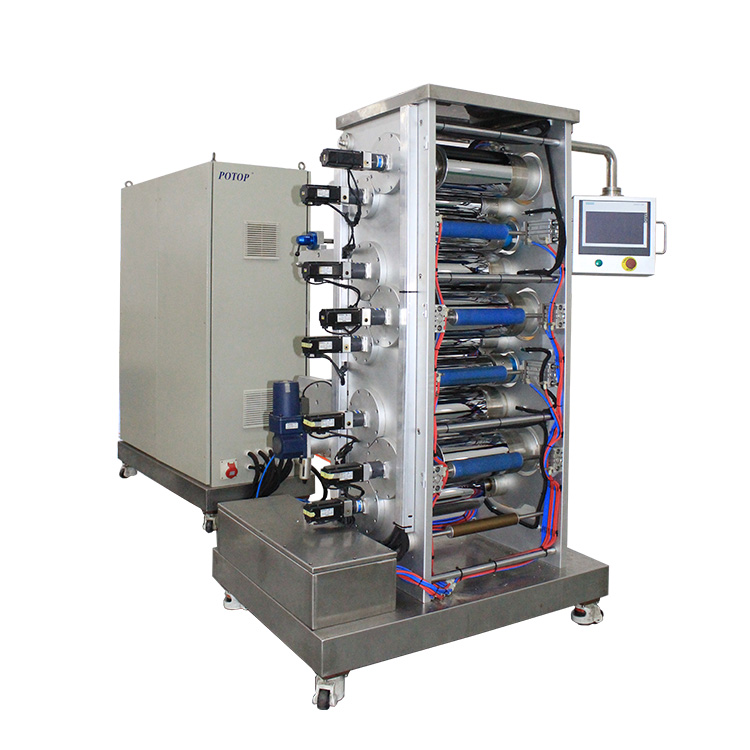
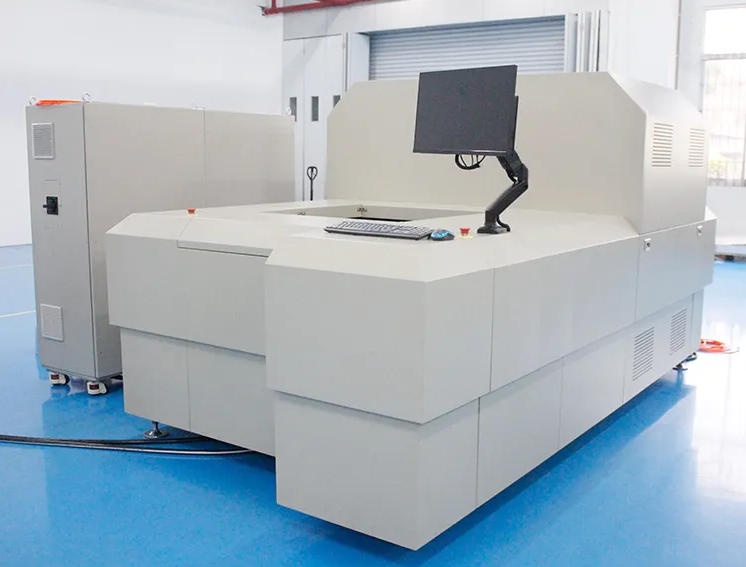
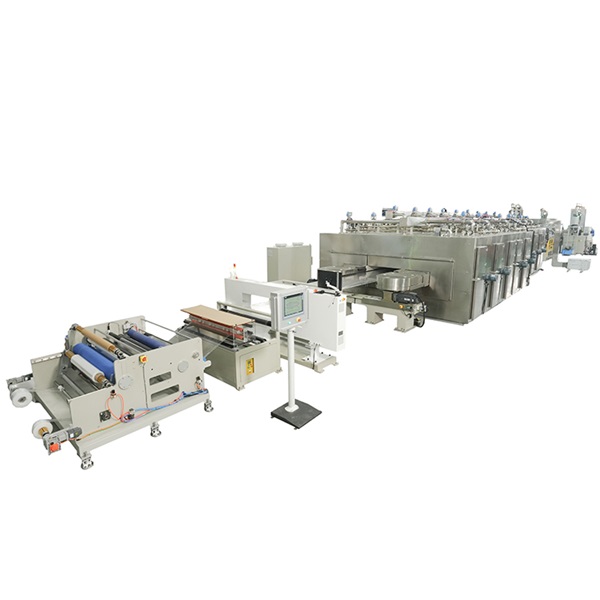
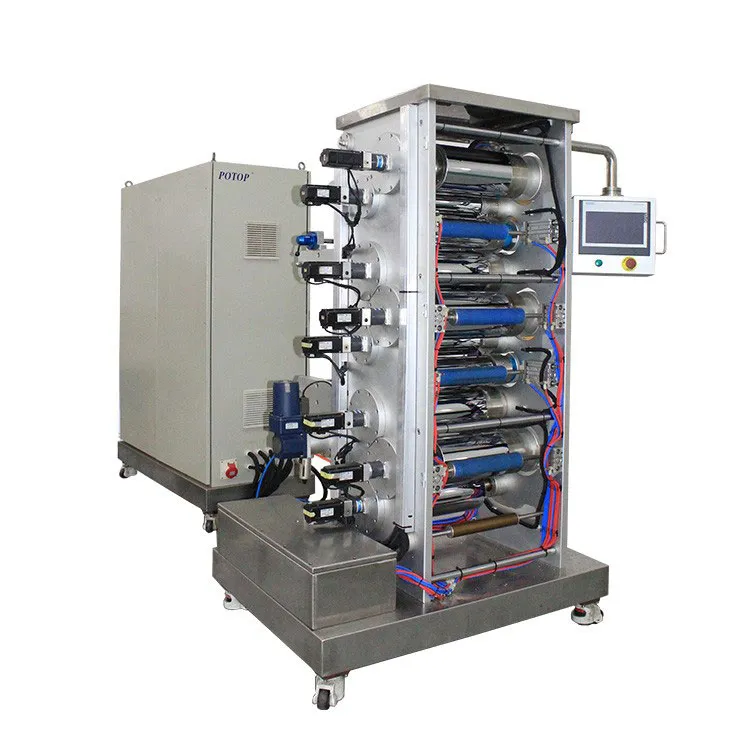
POTOP’s relevance as a lab extruder manufacturer comes from its combination of extrusion and sample-preparation equipment. Its portfolio includes twin-screw pelletizing, cast film, blown film, multilayer coextrusion, sheet extrusion and filament equipment, alongside separate rheology and film-stretching instruments. These systems support laboratories investigating both how a formulation processes and how the resulting sample performs.
The company’s laboratory twin-screw extruder illustrates the compounding side of that offering. Published configurations include 16 mm and 21.7 mm screws, modular screw elements, a split barrel, vacuum exhaust and graphical process-data display. These features support formulation changes, cleaning between trials and monitoring experimental conditions.
For a development laboratory, the main equipment paths include:
Compounding and pelletizing for blending, filling and reinforcement trials.
Cast-film and sheet preparation for evaluating material appearance and physical properties.
Blown-film and coextrusion trials for studying film formation and layer structures.
These are different systems selected around the experiment, rather than interchangeable functions of one universal machine. POTOP is worth considering when a project requires a broader polymer-processing workflow. The inquiry should identify the desired sample first, then establish the extrusion, cooling, take-off and measurement configuration needed to produce it.
COLLIN offers laboratory extrusion equipment spanning teaching, research and pilot applications. Its Teach Line extruders include compact single-screw machines with nominal screw diameters of 12, 16 and 20 mm, intended for training, screening and experimental work.
For laboratories requiring more configuration options, the P Professional extruder range supports different downstream equipment, temperature configurations and controls. This makes COLLIN relevant to organizations expecting an extrusion system to support several research programs over time.
The main purchasing question is which configuration is necessary now and which extensions may be needed later. A teaching laboratory and a high-temperature polymer-development facility should not select equipment from the same specification simply because both require a small extruder.
Labtech Engineering is a candidate for laboratories combining compounding with film or sheet preparation. Its 12 mm twin-screw extruder provides a small continuous-processing option, with published screw speeds up to 800 rpm and an approximate maximum output of 4 kg/h for LDPE. That output is material-specific and should not be treated as a universal rating.
The company also supplies cast-film and sheet attachments for experiments that need to assess downstream forming as well as melting and mixing.
For procurement teams, the important distinction is between the extruder and the complete experimental line. Feeders, dies, cooling equipment, take-off units and controls should be identified individually so that the delivered system can produce the required test samples.
Thermo Fisher Scientific’s laboratory and pilot twin-screw extruders include the Process 11, Process 16 and TSE 24 MC. The Process 11 is positioned for low-throughput development, while the larger systems extend the range toward pilot work.
This portfolio is relevant when material availability is limited but continuous feeding and extrusion remain important. For such projects, the lowest advertised feed rate is only a starting point. A laboratory should establish the stable operating range of its own formulation and the total material consumed during startup, sampling and shutdown.
The evaluation should also establish which downstream accessories are required and whether the selected feeder can accurately handle the intended powder, pellets or additive mixture.
The Brabender TwinLab series, presented through Anton Paar’s current product portfolio, is designed for laboratory R&D, quality control and pilot-scale process development. Its stated applications include raw-material assessment, screw-configuration optimization and process-window studies.
Its relevance lies in connecting extrusion trials with material and process evaluation. A laboratory comparing resin grades or formulation changes may need repeatable measurements as much as a physical extrudate.
Before selecting a configuration, the technical discussion should establish which variables are measured, where the sensors are positioned and how results are recorded. It should also distinguish standard functions from optional software, feeders and downstream equipment. Those details determine how readily the system fits an existing quality-control or research method.
Xplore addresses small-volume research through micro-compounders and associated shaping instruments. Its published portfolio includes milliliter-scale systems, recirculation capabilities, and equipment for preparing molded specimens, film, fibers and filament.
This is a distinct equipment category within laboratory extrusion. A recirculating micro-compounder allows a small material charge to undergo controlled mixing before discharge. That can be valuable when screening experimental polymers or costly additives with limited sample availability.
However, recirculating batch results should not be treated as equivalent to steady-state continuous extrusion because the processing history differs. Xplore is particularly relevant to early formulation screening, while a later continuous-extrusion trial may still be needed to investigate feeding, venting and production-scale behavior.
Coperion’s ZSK 18 MEGAlab laboratory extruder brings its twin-screw compounding technology into laboratory development. The published system uses an 18 mm screw diameter and modular processing sections, with provisions for flexible feeding and configuration changes.
Coperion positions this equipment for small-batch research and scale-up to larger ZSK extruders. It is therefore relevant when a laboratory project is closely connected to an industrial compounding process. Formulation trials can be planned around conveying, mixing, side feeding and venting functions that will also matter at production scale.
A shared equipment family helps structure that work, but it does not eliminate scale-up testing. The supplier discussion should address which process relationships can be transferred and which must be re-established on the larger machine.
Leistritz includes laboratory extrusion equipment within its broader ZSE portfolio. Its small-scale twin-screw offering also includes the ZSE 18 HP-PH laboratory line for pharmaceutical and life-science development.
Leistritz is worth considering for laboratories whose main task is developing a twin-screw process rather than producing a particular film or sheet geometry.
Model selection needs to follow the application. General polymer research and pharmaceutical development can require different material-contact surfaces, cleaning provisions and documentation. Procurement teams should request a configuration-specific proposal and avoid transferring specifications or capabilities from one ZSE model to another.
Rondol’s compact twin-screw extrusion systems are available in horizontal and vertical layouts. Its published range includes 10.5 mm and 21 mm machines, with several length-to-diameter configurations and ancillary equipment for feeding, cooling and downstream handling.
The range is relevant to small-scale hot-melt extrusion and R&D projects where equipment layout and laboratory space influence the purchase. Available accessories include different die types, pelletizers, haul-offs and melt pumps.
A useful evaluation should consider the working space around the machine, not only the extruder footprint. Operators still need access for feeding, screw removal, cleaning, sample collection and maintenance. The horizontal or vertical layout should support that workflow as well as the process itself.
Davis-Standard’s sheet extrusion equipment includes laboratory and pilot systems with extruders, controls, screw technology and roll stands. The documented laboratory offering covers both single-layer and multilayer configurations.
This makes the company relevant when the research question concerns what happens after the melt leaves the die. Sheet properties can depend on roll temperature, cooling, draw conditions and surface contact, so a compounder alone may not provide a representative sample.
Davis-Standard is worth considering for sheet-focused product development and process validation. The key question is whether the laboratory forming section reproduces the conditions that matter to the final product, rather than simply whether it can produce a flat strip.
The most effective shortlist begins with the required result. “Small extruder” describes equipment size, but it does not define an experimental method.
| Research Objective | Starting Equipment Type | What the Trial Must Establish |
|---|---|---|
| Screen a limited quantity of a new formulation | Micro-compounder | Mixing behavior and enough material for the planned tests |
| Develop a continuously compounded material | Laboratory twin-screw extruder | Stable feeding, mixing, venting and usable extrudate |
| Evaluate melting and extrusion behavior | Laboratory single-screw extruder | Stable melt delivery under defined conditions |
| Prepare cast film or sheet | Extruder with flat die and controlled take-off | Thickness, surface quality and repeatable cooling conditions |
| Study blown-film behavior | Laboratory blown-film line | Bubble stability, draw conditions and film consistency |
| Investigate multilayer structures | Coextrusion system | Layer continuity, distribution and interfacial performance |
| Prepare a production scale-up trial | Pilot or production-related laboratory system | Transferable process data and clearly identified scale-up limits |
These categories can overlap, but they should not be assumed interchangeable. A formulation that compounds successfully may still be unsuitable for stable blown-film production. Likewise, a sheet that looks acceptable may not have the thickness consistency required for a meaningful property comparison.
The equipment specification should therefore connect material preparation, sample formation and the final measurement.
Minimum feed rate, batch size and total trial consumption describe different things.
A system may run at a low steady-state throughput yet consume substantially more material while reaching stable conditions. Purging and material left inside the processing section also affect the quantity needed for a complete experiment.
For expensive or limited formulations, request an estimate covering startup, stabilization, sampling, shutdown and cleaning. The relevant figure is the material required to obtain useful results.
A laboratory extruder should record the variables needed to explain the experiment, not simply display a large number of readings.
Depending on the task, these may include feed rate, screw speed, torque or motor load, pressure, barrel temperature, measured melt temperature, roll temperature and take-off speed.
The technical discussion should clarify:
Which values are measured and which are calculated.
Where sensors are installed.
How often data is recorded and which export formats are available.
What calibration and verification procedures are provided.
Barrel setpoint and actual melt temperature, for example, should not be treated as the same measurement.
The die and downstream equipment deserve the same attention as the extruder.
A pelletizing trial requires a stable strand and suitable cutting arrangement. A film trial requires controlled cooling and take-off. A sheet trial may require a roll stack with independently adjustable conditions.
Before requesting a machine quotation, define the sample geometry, quantity and acceptance criteria. This reduces the risk of purchasing an extruder that processes the material but cannot prepare a useful test specimen.
Laboratories often change formulations more frequently than production facilities. Screw access, barrel opening, die disassembly and trapped-material locations therefore affect both productivity and experimental reliability.
A practical demonstration should show the changeover between two materials, not only steady operation with one resin. The time and material required to obtain an uncontaminated sample are especially important in color, additive and specialty-polymer research.
Laboratory data can inform production development, but settings should not be transferred through a simple ratio.
Screw geometry, fill level, shear exposure, residence time, heat transfer and downstream cooling can change with equipment scale. A supplier should explain which relationships its proposed laboratory system helps investigate and where further validation is needed.
Installation planning also matters. Confirm utility requirements, training, spare parts and the scope of process support before ordering. A compact extruder can still require substantial space for feeders, vacuum equipment, cooling and take-off units.
A material trial is most useful when the laboratory and manufacturer agree on the question before the machine starts.
For a compounding project, success might mean stable feeding and a specified dispersion result. For film research, it might mean producing enough material within an agreed thickness range for subsequent testing. These outcomes require different trial plans.
A concise acceptance plan should define:
Material: Resin grade, formulation, feed form and conditioning.
Operating window: Intended feed rate, temperature range and processing conditions.
Sample requirements: Geometry, quantity and measurable acceptance criteria.
Records: Machine configuration, time-series data, observations and test results.
The report should distinguish stable-run results from startup samples and document adjustments made during the trial. This makes it possible to judge whether success is repeatable and whether the proposed equipment addresses the actual development task.
The scope can range from a standalone extruder to a complete experimental line with feeders, dies, cooling, pelletizing or film-forming equipment and controls. Some manufacturers also offer separate testing instruments. The quotation should identify the included equipment, optional items and interfaces clearly.
Laboratory equipment is generally selected for experimental flexibility, manageable material consumption, accessible cleaning and useful process measurements. Production equipment places greater emphasis on sustained output and long operating runs. A smaller machine is not automatically a better research instrument; its controls and configuration must support the experiment.
No. Twin-screw equipment is often appropriate when mixing, staged feeding or devolatilization is central to the work. A single-screw system may be suitable for studying melt processing or preparing samples from an already compounded material. Selection should follow the research objective.
Some systems accept interchangeable dies and downstream modules, but this must be confirmed for the specific equipment. Feeding range, melt delivery, controls and physical interfaces must suit every planned configuration. A manufacturer offering all three processes does not necessarily offer them on one machine.
Xplore’s micro-compounders and Thermo Fisher’s small laboratory extruders represent different approaches worth evaluating: small-volume compounding and low-throughput continuous processing. The choice depends on whether the experiment requires controlled batch mixing or continuous operation.
They can help identify formulation trends and processing windows, but they do not guarantee production performance. Scale-up should account for differences in geometry, feeding, heat transfer, residence time and downstream processing. Pilot testing may be necessary before commercial implementation.
Compare the complete experimental capability, not only screw diameter or base-machine price. Confirm the feeders, screw elements, dies, downstream units, sensors, software, utility equipment and commissioning services included in each proposal. Otherwise, apparently similar quotations may cover substantially different systems.
The right lab extruder manufacturer is the one whose equipment can answer the laboratory’s research question and produce evidence that supports the next development decision.
Micro-compounding, continuous formulation development, film preparation and sheet processing are related activities, but each places different demands on the machine. A strong equipment proposal makes those requirements explicit and connects them to a testable configuration.
For laboratories working across formulation processing and physical sample preparation, POTOP's laboratory extrusion equipment spans compounding, film, sheet and coextrusion applications. This breadth is relevant when the research workflow extends from preparing a material to evaluating it in a specific physical form.
A configuration inquiry should include the material, available trial quantity, target sample dimensions and measurements required. Those details provide a practical starting point for selecting equipment that fits the laboratory’s work.