Address:
202,101, No. 3, Kaifa Road, Dalong Street ,Panyu District, Guangzhou, Guangdong Focus On Polymer New Molding Equipment


WHAT ARE YOU LOOKING FOR?


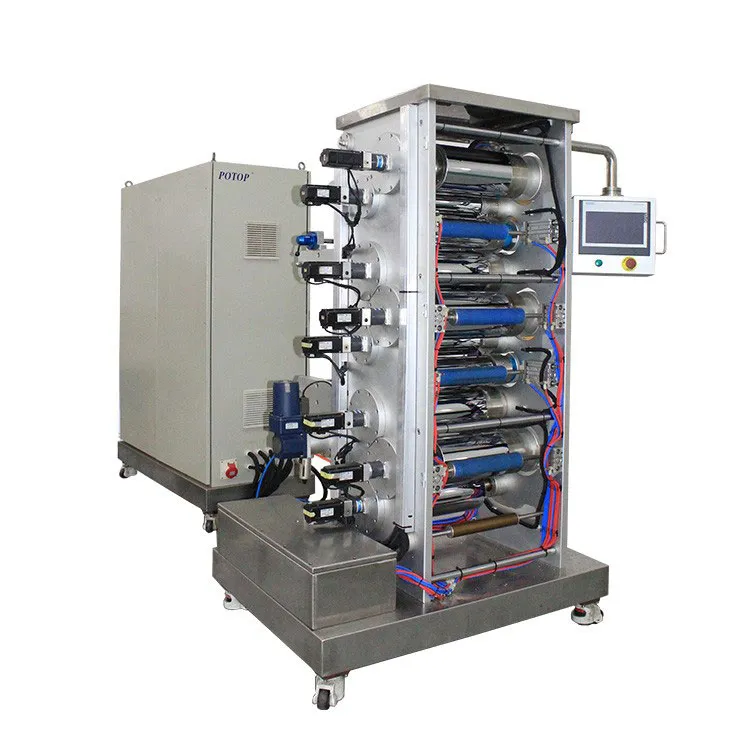


In polymer film research and advanced material development, understanding how materials respond to multi-directional stretching is essential for improving strength, flexibility, and functional performance. A biaxial tensile tester provides researchers with a controlled method to analyze how films, membranes, and thin materials behave when stretched simultaneously in two directions.
However, selecting the correct stretching ratio is not simply about choosing the highest available specification. A 4×, 5×, or 10× stretch ratio serves different research purposes. Conventional packaging films, functional polymer materials, and advanced specialty films may require completely different testing capabilities.
Choosing the right biaxial tensile tester helps laboratories improve material evaluation accuracy, optimize production processes, and reduce development risks. This article explains how different stretch ratios influence film R&D and how to select the most suitable testing system.
Stretch ratio is one of the key parameters in biaxial stretching research. It represents how much a sample can be extended compared with its original size during testing. In polymer development, stretching conditions directly influence molecular orientation, mechanical strength, transparency, and dimensional stability.
During industrial film production, biaxial orientation is commonly used to improve material performance. When polymer chains are aligned through controlled stretching, films can achieve better tensile strength, heat resistance, and barrier properties.
A biaxial tensile tester allows researchers to simulate these stretching processes at laboratory scale. By controlling stretching speed, temperature, and deformation range, engineers can study how different materials respond under specific conditions before moving toward pilot production.
The required stretch ratio depends on several factors, including material type, target application, research stage, and expected performance improvement. A laboratory developing standard packaging films may only require moderate stretching capability, while advanced optical films or energy-related materials may need a much higher deformation range.
A 4× stretching system is often suitable for basic film research, quality evaluation, and early-stage material development. It provides a practical balance between testing capability and equipment complexity.
For laboratories studying conventional polymer films, a 4× biaxial tensile tester can provide valuable information about tensile behavior, deformation characteristics, and directional mechanical properties.
Typical applications include packaging materials, polymer sheets, and general laboratory research projects. In these cases, researchers usually focus on understanding how stretching affects material performance rather than reproducing extreme industrial conditions.
A 4× system is also suitable for organizations looking for a compact small tensile testing machine. It can provide essential testing functions while requiring less laboratory space and simpler operation compared with higher stretching systems.
However, companies should consider future research plans before selecting a 4× configuration. If upcoming projects involve advanced functional films or highly oriented materials, a higher stretching range may provide greater flexibility.
A 5× stretching system offers a wider testing range and is commonly selected for more advanced film research. Compared with a 4× system, it allows researchers to explore greater deformation levels and better understand how stretching affects material structure.
A 5× biaxial tensile test machine is suitable for projects where molecular orientation, mechanical improvement, and material stability are important research goals.
| Stretch Ratio | Typical Applications | Research Focus |
|---|---|---|
| 4× | Conventional polymer films | Basic mechanical evaluation |
| 5× | Functional films and advanced polymers | Orientation and performance optimization |
| 10× | Specialty high-performance materials | Extreme deformation analysis |
For many research teams, a 5× configuration provides an ideal middle ground. It offers additional testing capability without requiring the complexity and investment associated with ultra-high stretching systems.
A 5× biaxial machine can support the development of improved barrier films, specialty membranes, and other materials where controlled stretching plays an important role in final performance.
A 10× stretch ratio is designed for demanding research environments where materials need to withstand significant deformation. It is often used for advanced material studies that require a deeper understanding of stretching behavior.
High-performance polymer films, flexible electronic materials, optical films, and energy-related separator materials may require extensive biaxial stretching analysis. In these applications, small changes in molecular orientation can significantly influence final product characteristics.
A high-performance biaxial tensile tester enables researchers to evaluate materials under more challenging stretching conditions. This helps identify the relationship between processing parameters and material performance.
Although a 10× system provides greater flexibility, it is not always the best choice for every laboratory. For standard material evaluation, a lower stretch ratio may already meet testing requirements. The correct selection depends on the actual research objectives rather than simply choosing the highest specification.
When choosing a biaxial tensile tester, researchers should evaluate several factors beyond stretch ratio. The right equipment should match both current testing needs and future development plans.
Define the required stretch range: Select a system according to the deformation level needed for current materials and future research projects.
Evaluate temperature control performance: Polymer materials often show different behaviors under different temperatures, making precise thermal control important.
Check sample compatibility: Confirm that the equipment supports the required film size, thickness, and material characteristics.
Consider clamping and control accuracy: Stable gripping and precise movement control help improve testing reliability.
Review software and data analysis functions: Efficient data collection and analysis can improve research productivity.
A suitable biaxial tensile test machine should provide reliable results while supporting different stages of material development. For universities, research institutions, and industrial laboratories, selecting the right configuration can improve testing efficiency and reduce future limitations.
POTOP-LAB provides laboratory testing solutions designed for polymer research, film development, and advanced material evaluation. The company focuses on helping researchers analyze material behavior through accurate and reliable testing equipment.
Different research projects require different levels of testing capability. Whether users need a compact small tensile testing machine for basic experiments or an advanced biaxial machine for complex stretching studies, selecting the right system is essential for obtaining meaningful results.
With professional technical support and laboratory testing solutions, POTOP-LAB helps customers improve material development efficiency through advanced biaxial tensile testing technologies.
Selecting laboratory equipment is not only about solving current testing requirements but also supporting future research expansion. A flexible biaxial tensile tester allows researchers to explore different materials and applications as development goals change.
Key considerations include:
Research objectives: Determine whether the focus is basic evaluation, process simulation, or advanced material development.
Material characteristics: Different films and polymers require different stretching conditions.
Future expansion needs: Consider whether future projects may require higher stretching capability.
Performance and investment balance: Choose equipment that provides the required functions without unnecessary complexity.
A well-selected testing system can support long-term research efficiency and help laboratories make more informed material development decisions.
It tests how materials behave when stretched in two directions simultaneously.
Yes, suitable systems can test various polymer films and thin materials.
Temperature affects polymer behavior, stretching response, and test accuracy.
It depends on material type, application goals, and research requirements.
It helps researchers optimize material properties before large-scale production.