
Address:
202,101, No. 3, Kaifa Road, Dalong Street ,Panyu District, Guangzhou, Guangdong Focus On Polymer New Molding Equipment


WHAT ARE YOU LOOKING FOR?


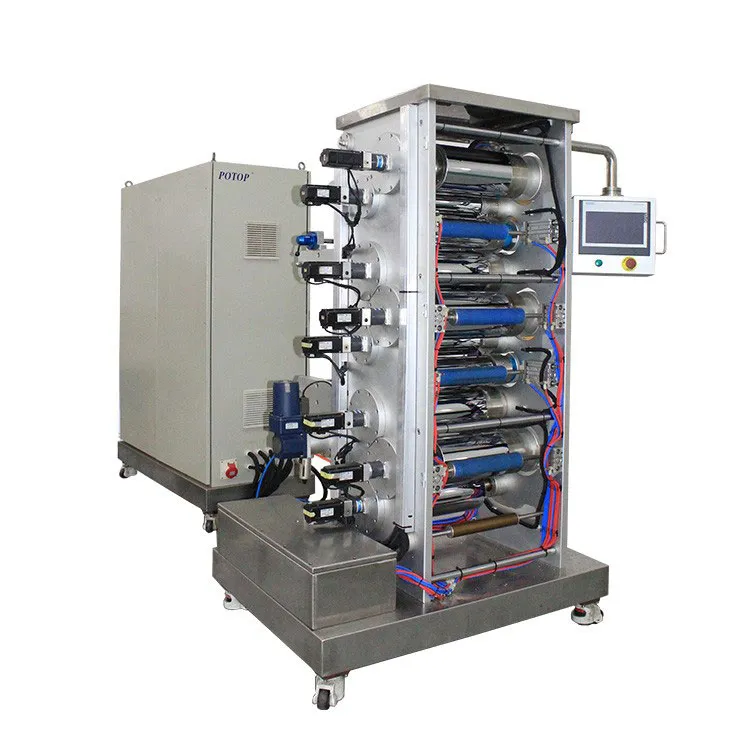


When studying how materials respond to different kinds of mechanical stress, scientists and engineers rely on a range of testing methods. Among them, biaxial and tensile tests are essential for understanding how materials perform in one or more directions under load.
Biaxial testing refers to mechanical tests that evaluate how materials behave when subjected to loading in two perpendicular directions at the same time. Typically, the specimens are square or circular, and stresses are applied along two orthogonal axes under controlled conditions. This approach helps researchers understand nonlinear and anisotropic behavior—how a material’s properties differ depending on direction.
Common materials evaluated using biaxial tests include metal sheets, composites, silicone and natural rubber elastomers, polymeric thin films, textiles, and biological soft tissues like porcine thoracic aortas. Because many real-world materials encounter multi-directional stress, biaxial testing provides a more realistic assessment of performance and durability.

An axial tensile test measures the mechanical properties of a material or fastener when it is stretched along its longitudinal axis until failure. This test reveals key parameters such as yield strength, ultimate tensile strength, and elongation, which describe how a material responds under direct tension.
While uniaxial tensile testing is the most basic and widely used method, it provides data only for one-dimensional stress conditions. Therefore, it serves as a foundation that biaxial testing expands upon to simulate more complex environments.
Biaxial tensile testing is particularly effective for characterizing the mechanical properties of soft materials like silicone and natural rubber. Because these materials often deform differently depending on direction, a biaxial setup helps capture accurate stress–strain relationships. This approach also applies to composite materials, thin films, and biological tissues, allowing for better modeling and design of flexible structures such as membranes and soft actuators.
Biaxial analysis generalizes the traditional concept of tensile testing by applying stresses along two perpendicular axes at once. Through this method, engineers can use biaxial tensile tester to observe how a sample distributes stress and strain simultaneously in different directions. Materials studied in such configurations include metal sheets, elastomers, textiles, composites, and biological tissues. The insights gained from biaxial analysis improve predictions of material performance in complex applications like medical implants, flexible electronics, and structural components.
Uniaxial materials, such as uniaxial crystals, have one optic axis and exhibit anisotropy—direction-dependent behavior—along a single direction. In contrast, biaxial crystals have two optic axes that intersect at a common point, showing more complex directional properties. Similarly, in mechanical testing, uniaxial tests apply force in one direction, while biaxial tests apply it in two directions simultaneously, providing a fuller understanding of material behavior.
There are three principal types of tensile strength that describe how materials resist tension:
Yield strength – the stress at which permanent deformation begins.
Ultimate strength – the maximum stress a material can endure before necking or weakening.
Breaking strength – the stress level at which the material fractures completely.
These measurements are critical for assessing how materials perform under various loading conditions.
Tensile testing methods fall into two main categories:
Uniaxial tensile tests, which apply a single directional force to determine tensile strength.
Biaxial tests, which apply forces in two directions at once, providing data on resistance to multi-directional stress.
Together, these methods offer a comprehensive understanding of how materials behave under both simple and complex loading environments.