
Address:
202,101, No. 3, Kaifa Road, Dalong Street ,Panyu District, Guangzhou, Guangdong Focus On Polymer New Molding Equipment


WHAT ARE YOU LOOKING FOR?


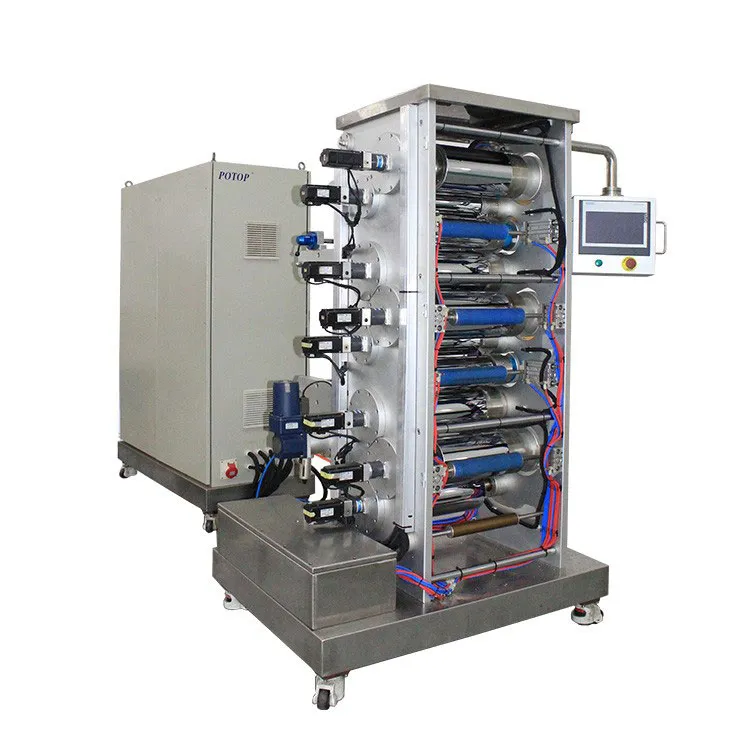


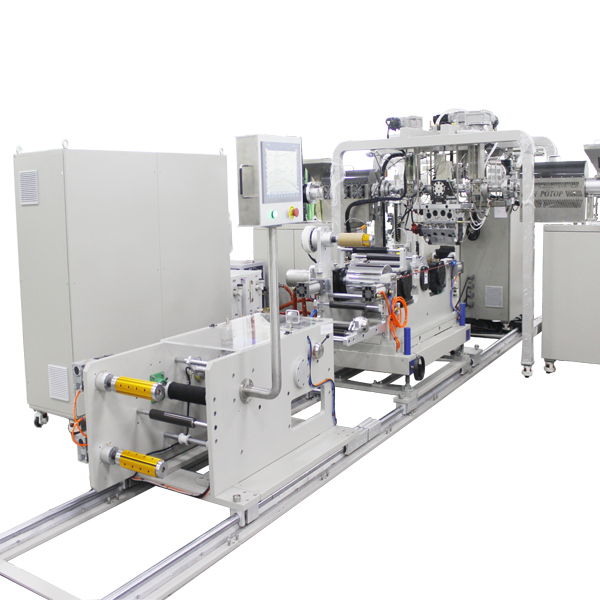
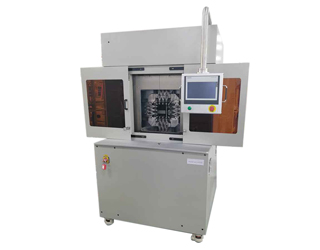
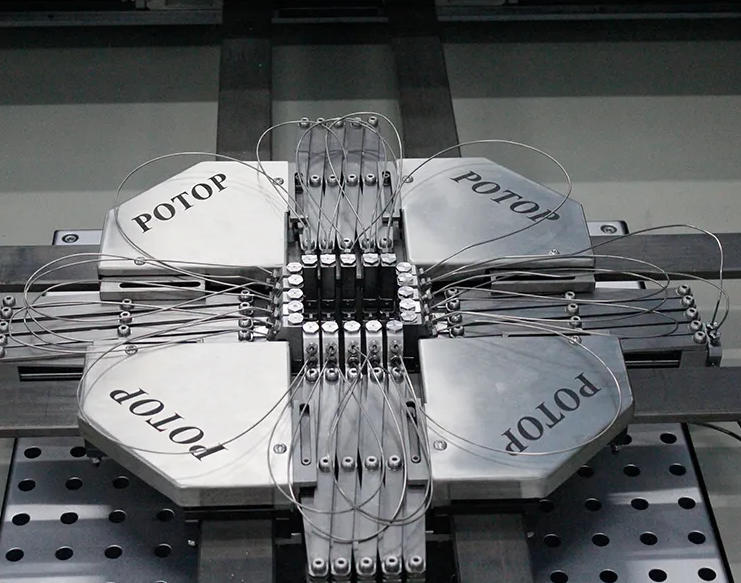
POTOP provides two types of pelletizers: three-screw and twin-screw, each with distinct characteristics in structure, performance and applicable scenarios.
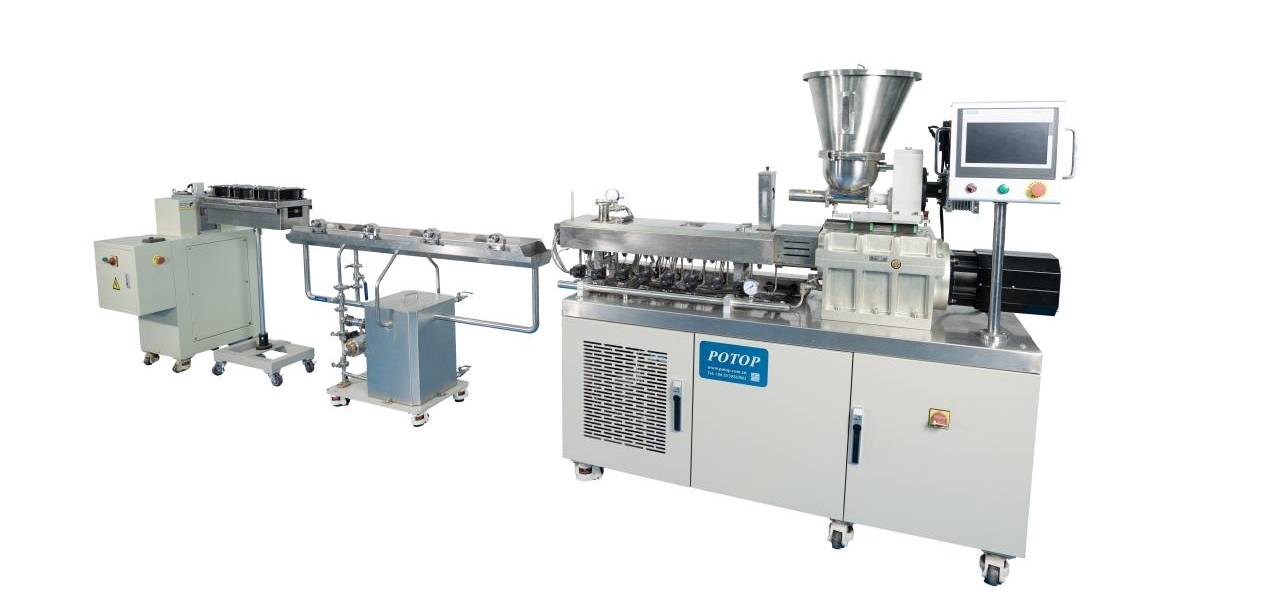
Twin-screw pelletizer: Designed with two intermeshing screws that rotate in the same direction to convey, melt, shear and disperse raw materials. Its core advantage lies in precise temperature and shear control, making it particularly suitable for high-precision modification processes. For instance, in grafting and crosslinking reactions of engineering plastics such as PA, PC, and PBT, the twin-screw extruder ensures consistent reactions via a narrow residence time distribution.
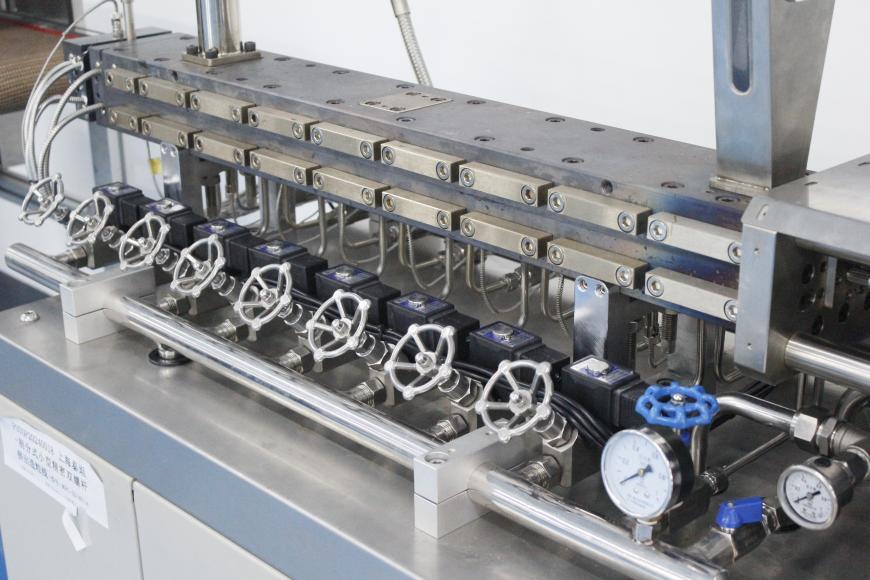
Three-screw pelletizer: The three-screw extrusion line machine adopts a unique structure with a central main screw and two auxiliary screws on both sides, forming a complex flow field and more mixing paths. This design not only improves dispersion uniformity, but also achieves more even heating of materials through optimized internal-to-external heating, resulting in significantly lower energy consumption.
Category | Twin-screw Pelletizer | Three-screw Pelletizer |
Structural Principle | Two intermeshing screws rotating in the same direction, enabling precise shearing and dispersion. | A central main screw with two auxiliary screws on both sides, creating a complex flow field and extended mixing paths. |
Dispersion Performance | Excellent dispersion effect, especially suitable for high-precision temperature-controlled applications such as dynamically vulcanized TPV. | Dispersion uniformity differs by less than 5% from twin-screw models, and performs comparably in filled systems including calcium carbonate and talc powder modification. |
Equipment Cost | Moderate acquisition cost, suitable for scenarios with limited budgets but requiring high-precision control. | Higher upfront cost, yet one three-screw line can replace two twin-screw lines, saving over 30% in total cost. |
Applications of Twin-screw Pelletizer:
High-precision chemical reactions, processing of thermally sensitive materials, as well as R&D and small-batch production.
Applications of Three-screw Pelletizer:
Masterbatch production, highly filled systems (such as CaCO₃ and TiO₂ modification), high-capacity production scenarios where unit product cost can be reduced.
For more information, please contact our technical staff (Manager Zhang: 86-15099958922 (with WeChat))