Address:
202,101, No. 3, Kaifa Road, Dalong Street ,Panyu District, Guangzhou, Guangdong Focus On Polymer New Molding Equipment


WHAT ARE YOU LOOKING FOR?




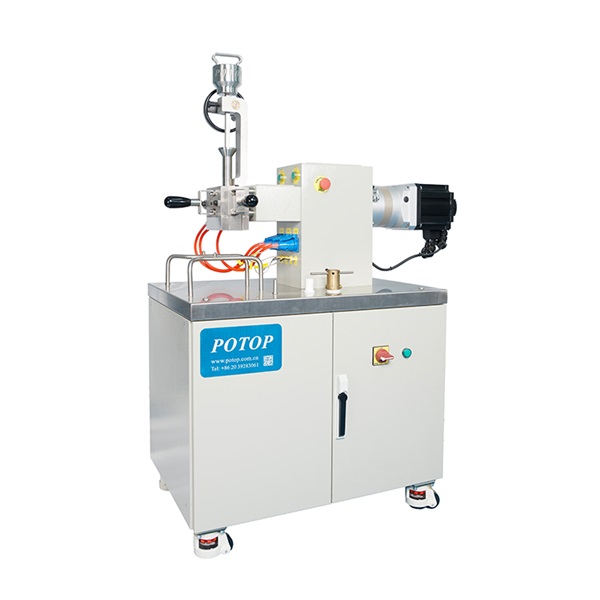
As a "transparent star" among polymer materials, polymethyl methacrylate (PMMA) boasts a high light transmittance of 92%–93%, excellent weather resistance, and flexible processability, making it widely used in optical displays, medical devices, high-end packaging, and other fields. Its amorphous structure endows the material with outstanding dimensional stability, and precision molding processes can further unlock its potential in emerging sectors such as flexible displays and smart wearable devices.
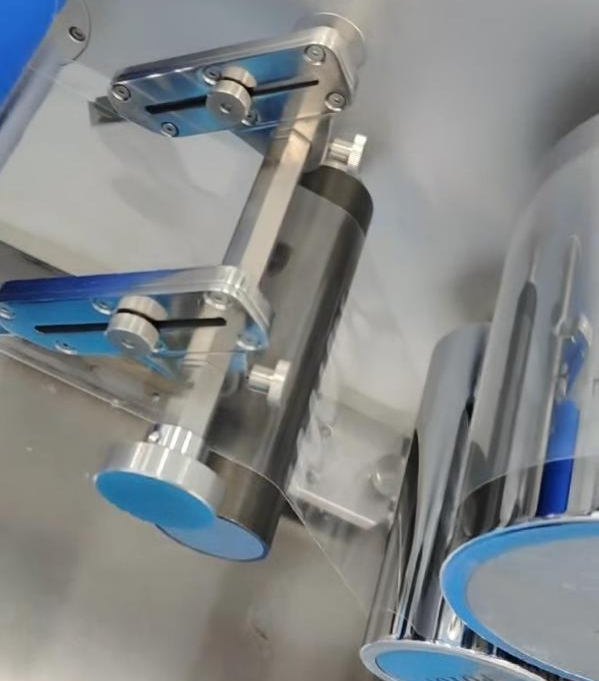
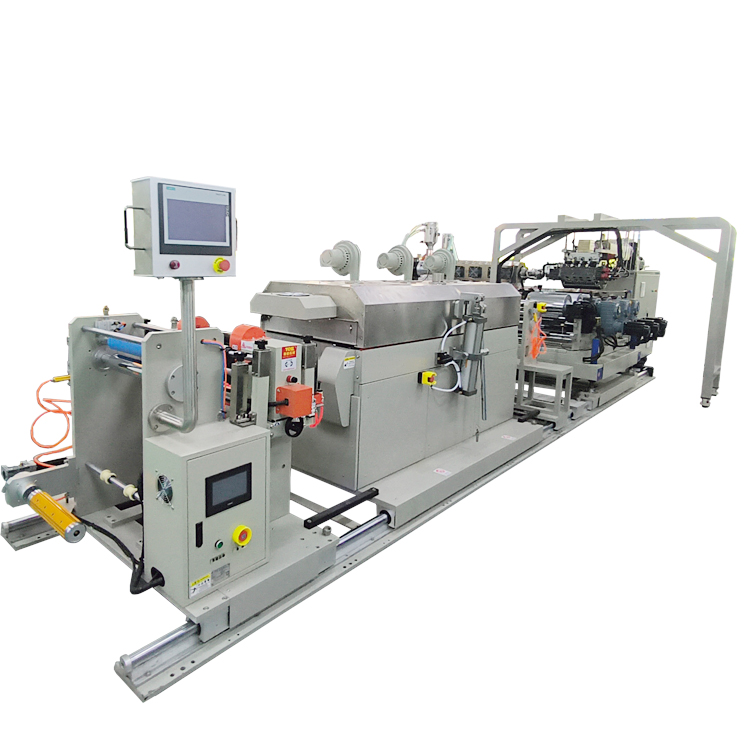
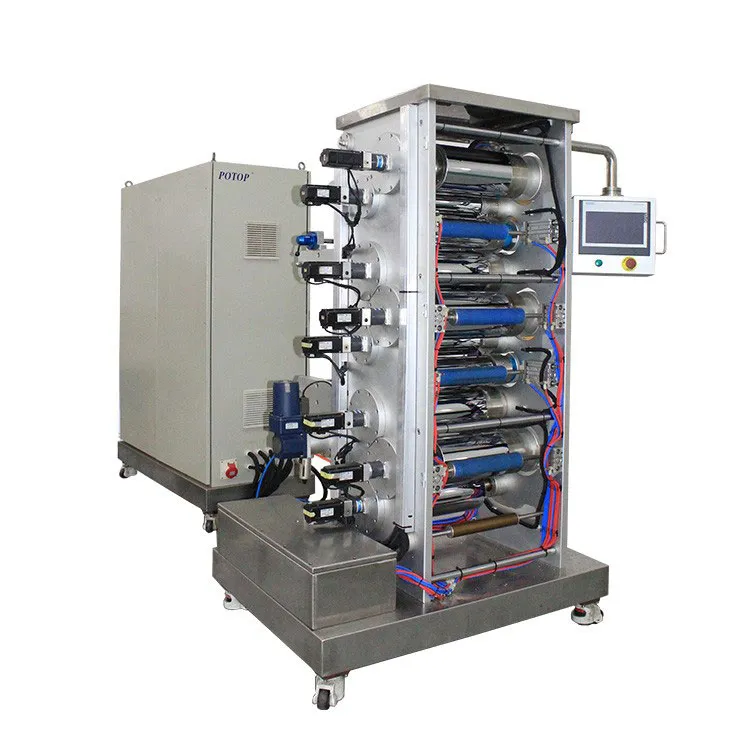
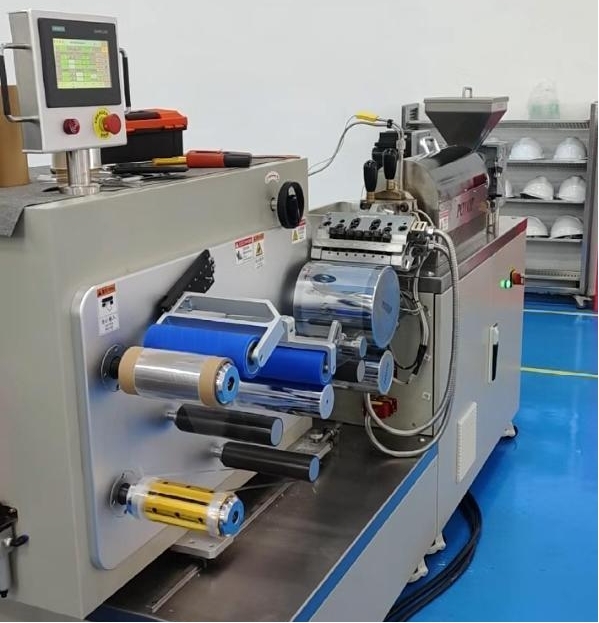
Using the desktop extrusion casting machine from POTOP Co., Ltd., precise preparation of laboratory-grade PMMA films can be achieved. Test results show that PMMA raw materials dried at 90 °C for more than 4 hours can be successfully formed using this equipment, with a stable product thickness of 75 μm, verifying the equipment’s high controllability over process parameters.
Extrusion temperature: Zone 1: 240–260 °C, Zone 2: 230–250 °C, Zone 3: 200–230 °C, ensuring uniform plasticization of the melt.
Die temperature: A high die temperature reduces internal stress and improves surface gloss and mechanical properties (such as tensile strength) of the film.
Screw speed: 30–60 rpm; low speed reduces the risk of shear degradation.
Take-off speed: Matched with the extrusion rate to ensure film flatness.
Extrusion pressure: Adopt a speed-pressure switching method to reduce internal stress and demolding difficulties.
PMMA raw materials must be dried at 90 °C for more than 4 hours to remove moisture, thereby avoiding bubbles, silver streaks, or yellowing during molding. This is a critical common step in both laboratory and industrial production.
1. Optical Display Sector As a material for light guide plates and protective films, PMMA film can improve light transmittance and scratch resistance of display devices. Combined with co-extrusion technology and functional coatings, it is expected to replace traditional glass substrates.
2. Medical Device Sector Leveraging its biocompatibility and disinfection resistance, PMMA film can be used to produce packaging films for single-use medical devices. Precision molding ensures uniform thickness and reliable sterile barrier performance. 3. Smart Wearables and Flexible Electronics Ultrathin films of 75 μm can serve as flexible display substrates. With impact-resistant modification technology, they meet the requirements of wearable devices for light weight and durability.
With the popularization of precision equipment such as desktop extrusion casting machines, PMMA film will develop toward multifunctional composites (e.g., co-extrusion with PC to improve impact resistance), ultra-thin thickness (below 50 μm), and functionalization (conductivity, thermal conductivity).
By optimizing process parameters and raw material formulations, its applications in new energy, aerospace and other fields are expected to be further expanded, making it a key material linking laboratory innovation to industrialization.
For more information, please contact our technical staff (Manager Zhang: 86-15099958922 (with WeChat)).