Address:
202,101, No. 3, Kaifa Road, Dalong Street ,Panyu District, Guangzhou, Guangdong Focus On Polymer New Molding Equipment


WHAT ARE YOU LOOKING FOR?


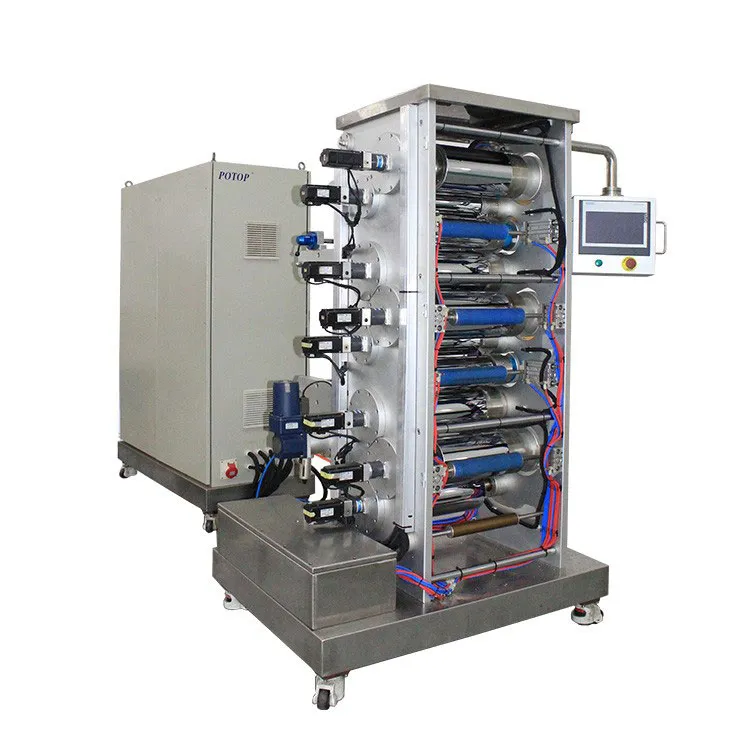


In the ever-evolving landscape of polymer processing, the choice between single and co-extruder machines plays a vital role in determining production efficiency and product quality. Understanding the fundamental distinctions between these two technologies is essential for manufacturers who want to upgrade their lines and stay competitive in applications ranging from basic packaging to advanced functional films. This article explains how single and co-extruder machines work, their key operational differences, advantages and disadvantages, comparative performance in real applications, and how to select the right solution for your specific needs. You will also see where each technology makes the most sense in industries such as food packaging, medical materials, and new energy films.
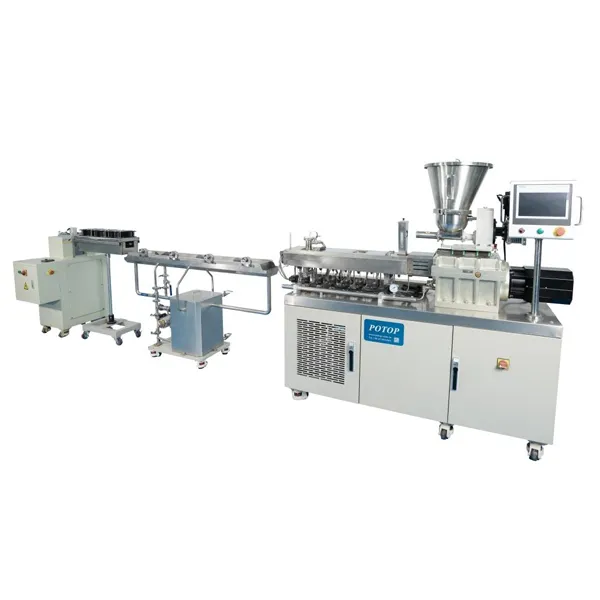
A single extruder (usually a single screw extruder) uses one rotating screw inside a heated barrel to melt, homogenize, and pump polymer melt through a die to form a continuous product such as film, sheet, or profile. This design is widely used because it offers a stable process, straightforward operation, and reliable output for a broad range of thermoplastic materials. Single extruders are commonly used for monolayer film, sheet, pipes, profiles, and cable sheathing where only one material or a uniform mixture is required. For example, in small-scale casting and sheet production, a single extruder provides a robust, cost-effective solution with relatively short setup time and simple maintenance.
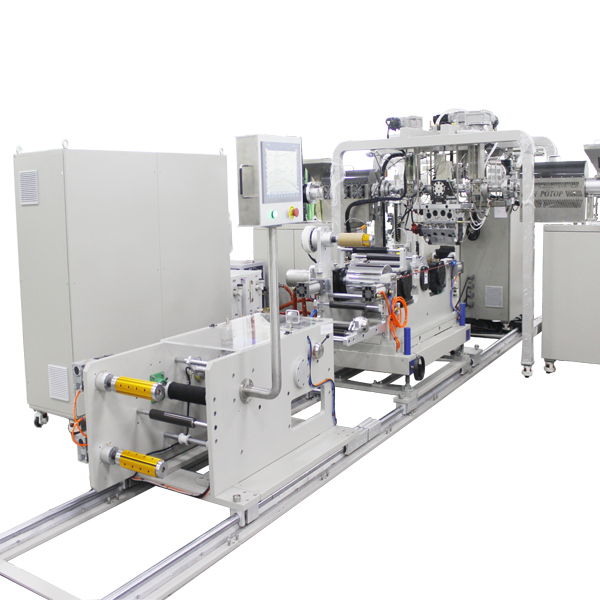
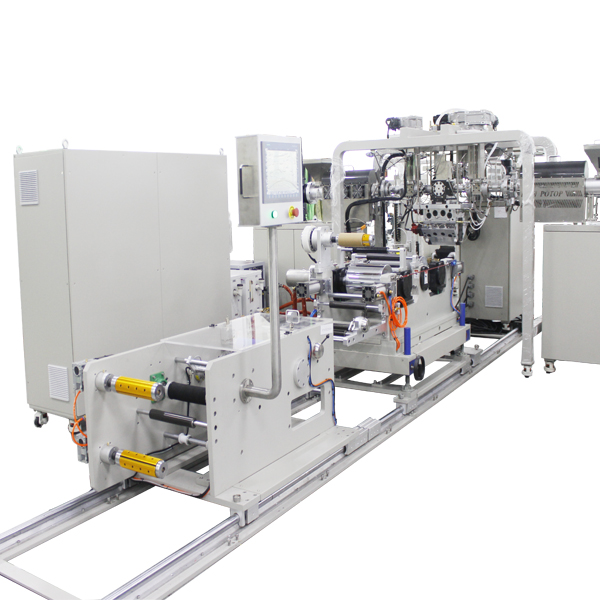
Co-extrusion is a process in which two or more extruders feed different molten polymers into a common die to produce a multi-layer structure in a single step. Each extruder typically handles one material, and the flows are combined in a specially designed feedblock or multi-manifold die that arranges the melt streams into layers before they exit as a film, sheet, or profile. This multilayer approach makes it possible to combine different polymers, each chosen for a specific property such as barrier performance, mechanical strength, surface characteristics, or cost optimization. For instance, a co-extruded film may have a tough outer layer for abrasion resistance, a core layer for stiffness or low cost, and an inner layer designed for sealing or adhesion.
In sectors such as food packaging and medical applications, co-extrusion enables structures with improved oxygen and moisture barrier, controlled friction, and tailored sealing behavior, often in thinner overall gauges than equivalent monolayer films.
Single and co-extruder machines share the same basic function—converting polymer pellets into a continuous product—but their operational complexity and control requirements are very different. Single extruders have one screw, one barrel, and one melt stream, which makes them simpler to set up, operate, and troubleshoot. Co-extrusion lines, in contrast, involve multiple extruders feeding into a common die, so temperature, throughput, and melt quality must be coordinated across all streams. The system typically includes separate gravimetric feeders, more advanced control systems, and additional instrumentation for monitoring layer thickness and interface stability. When processing polymers with different melt temperatures or rheology, co-extruders can adjust each extruder’s temperature profile and screw speed independently to achieve proper melt quality for each layer. This is crucial for high-end applications where layer adhesion, optical clarity, and barrier performance depend on tight process control.
A single extruder line has fewer variables: operators mainly manage screw speed, barrel and die temperature, and downstream cooling and winding. Changeovers between products are generally quicker because there is only one material path to purge and fewer zones to re-balance. On a co-extrusion line, start-up and changeover are more involved because multiple extruders and flow channels must be purged, and layer ratios must be re-calibrated. However, once stabilized, co-extruders allow precise adjustment of layer thicknesses and material distribution, enabling manufacturers to meet tight specifications on overall gauge and layer structure.
Single extruder machines offer several clear advantages, especially for straightforward applications and for companies with limited budgets or simpler product portfolios.
Lower initial investment: One extruder, a simpler die, and fewer control systems keep capital costs down.
Easier operation and training: Fewer process variables and simpler start-up make it easier to train operators and maintain consistent quality.
Reduced maintenance complexity: With fewer mechanical and electrical components, maintenance is more straightforward and spare parts inventory is smaller.
Faster product changeovers: Purging, changing materials, and adjusting process conditions typically require less time than on a multi-extruder line.
For small-scale casting, sheet production, or basic monolayer films, a single extruder often delivers high throughput and acceptable product performance with lower risk and shorter time to ROI.
The main limitation of single extruders is their restricted ability to engineer complex material structures. Because only one melt stream is available, any property combination must come from a single polymer or a blend, which may involve compromises in performance or cost. Monolayer products generally cannot match the barrier performance, mechanical balance, or surface functionality of multi-layer structures. For example, using a high-barrier polymer throughout the entire thickness of a monolayer film may be technically possible but economically inefficient compared to using it only as a thin functional layer in a co-extruded structure.
Co-extruder machines unlock a much wider design space for product engineers by allowing multiple polymers to be combined in a single product. This is particularly valuable when different layers must satisfy conflicting requirements such as toughness vs. sealability or barrier vs. cost.
Key advantages include:
Multi-layer design: Co-extrusion can create 2-, 3-, 5-, or more layer structures, each layer optimized for one or more properties.
Enhanced product performance: Barrier films, peelable seals, soft-touch surfaces, and high-gloss skins can be combined in one product.
Material cost optimization: Expensive polymers can be limited to thin surface or barrier layers, with lower-cost materials in the core.
Greater market differentiation: Multi-layer structures often provide unique combinations of performance that are difficult to copy using monolayer technology.
In demanding segments such as food packaging and medical-grade films, co-extrusion is often essential to meet regulatory, shelf-life, and functional requirements without overdesigning the product.
The benefits of co-extrusion come with increased complexity and cost. A co-extrusion line requires multiple extruders, a more complex die, advanced controls, and often more sophisticated feeding and blending systems.
Disadvantages and challenges include:
Higher capital investment: Additional extruders and specialized multi-layer dies significantly increase the initial cost.
More demanding process control: Operators must manage multiple temperature profiles, screw speeds, and layer ratios, which often calls for more training and experience.
Maintenance complexity: More components mean more potential failure points, and die cleaning can be more involved.
Longer start-up and changeover times: Achieving stable layer distribution and avoiding interfacial instabilities or encapsulation effects can take time, especially after major recipe changes.
As a result, co-extruders are best suited to operations that can exploit their capabilities—high value-added products, larger production volumes, or markets that reward advanced performance.
When comparing performance, it is important to distinguish between process efficiency and product functionality. Single extruders usually win on simplicity and can be extremely efficient for monolayer products where the required properties are straightforward.
Co-extruders may require more time and expertise to run optimally, but they enable products with significantly higher functional value. For example, co-extruded barrier films for food packaging can extend shelf life compared to monolayer films, while medical-grade co-extruded tubing can combine stiff outer layers with softer inner layers to improve both handling and patient comfort.
Below is a summarized view of key performance attributes:
Feature | Single Extruder | Co-Extruder |
Production complexity | Lower | Higher |
Initial cost | Lower | Higher |
Material versatility | Limited | Extensive (multi-layer, multi-polymer) |
Product functionality | Basic | Advanced (barrier, surface, mechanical tuning) |
Process control needs | Moderate | High (multi-variable, layer control) |
Changeover time | Generally shorter | Generally longer |
Single extruders are a good fit for:
Monolayer films and sheets where basic mechanical and optical properties are sufficient.
Simple pipes, profiles, and cable sheathing that do not require complex layering.
Small-lot production, R&D trials, and operations where quick product changes are frequent and budgets are constrained.
Co-extruders excel in applications where multiple functions must be integrated into one product:
Food packaging films requiring high oxygen or moisture barrier, sealability, and good print surfaces.
Medical films, tubing, and packaging that must meet strict regulatory and performance requirements.
New energy and functional films, such as components for photovoltaic modules or barrier layers in battery-related applications.
In these high-value segments, the ability to fine-tune the structure layer by layer often justifies the additional complexity and cost of a co-extrusion line.
Selecting between single and co-extruder machines requires a structured look at your current and future production needs. The main questions to ask include:
Product complexity: Do your target products require advanced barrier, multi-functionality, or differentiated surfaces?
Production volume: Are your volumes high enough to justify the investment and learning curve associated with co-extrusion?
Budget and ROI: Can you achieve an acceptable payback period by moving to co-extrusion, considering both capital and operating costs?
Material strategy: Do you plan to use a wide portfolio of polymers, or focus on a few standard grades for simpler products?
For businesses producing mainly simple monolayer films or sheets with modest performance demands, a single extruder remains a cost-effective and reliable choice. However, if your roadmap includes high-performance packaging, medical materials, or advanced functional films, investing in co-extrusion can provide a platform for long-term differentiation and growth.
From a strategic standpoint, single extruders are ideal when your primary goal is to deliver standard products efficiently at a competitive cost. They are also well-suited for smaller operations or for use as dedicated lines for individual products.
Co-extruders are more attractive when your business is aligned with markets that reward innovation and high performance, and when the ability to customize structures offers clear commercial advantages. Over time, multi-layer designs can reduce material consumption, improve product performance, and enable entry into higher-margin market segments.
Partnering with experienced equipment suppliers and leveraging their process knowledge can significantly reduce the risks associated with adopting co-extrusion, especially for complex applications such as medical packaging and new energy materials.
A single extruder uses one screw and one melt stream to produce a monolayer product, whereas a co-extruder combines multiple melt streams to create a multi-layer structure in a single step.
Not necessarily; co-extruders are better when you need multi-layer functionality and advanced performance, but single extruders are more economical and simpler for basic monolayer products.
Many plants transition by adding additional extruders and a multi-layer die, but feasibility depends on existing infrastructure, space, downstream equipment, and product strategy.
Co-extruders are usually preferred for medical packaging because they can deliver tailored barrier, sealing, and mechanical properties through multi-layer structures.
You should evaluate your target applications, required performance, expected volumes, and potential margin improvements; co-extrusion is most valuable when advanced functionality and differentiation clearly support higher pricing or market access.
Single and co-extruder machines both play important roles in modern polymer processing, but they address different levels of product complexity and market demands. Single extruders are ideal for straightforward monolayer products where simplicity, lower investment, and quick changeovers are priorities. Co-extruders, by contrast, offer powerful capabilities for designing multi-layer structures that combine multiple polymers into high-performance films, sheets, and profiles. For industries like food and medical packaging or new energy materials, this often makes co-extrusion the technology of choice to achieve required properties and regulatory compliance. By carefully assessing your product portfolio, target markets, and long-term strategy, you can choose the extrusion technology that best supports your production goals and business growth. If you share a bit more about your main products and target industries, I can help you tailor this article further toward your ideal customers and real use cases.