Address:
202,101, No. 3, Kaifa Road, Dalong Street ,Panyu District, Guangzhou, Guangdong Focus On Polymer New Molding Equipment


WHAT ARE YOU LOOKING FOR?


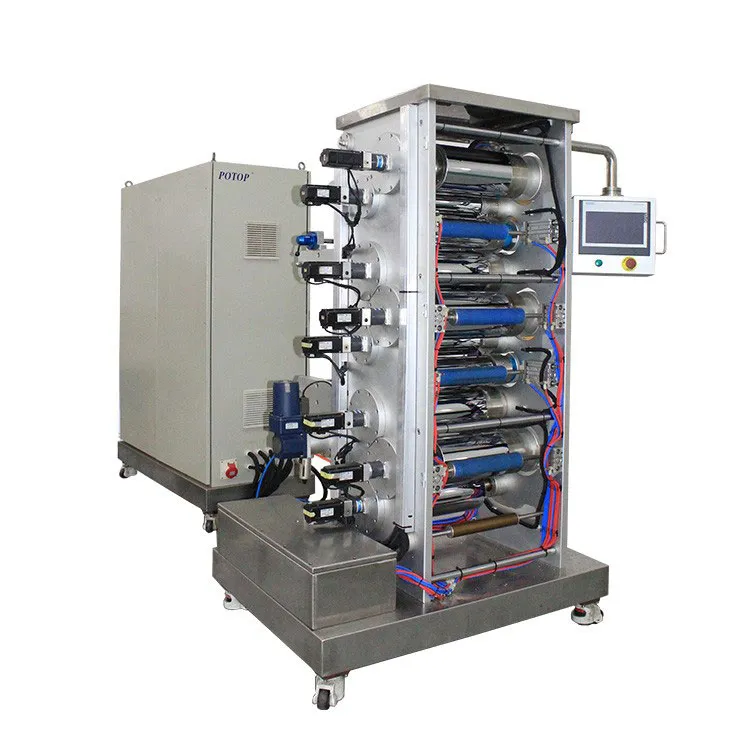


In materials science and engineering, reliable mechanical data is the foundation of safe design, robust products, and efficient material development. Tensile testing has long been a standard method for evaluating properties such as strength, stiffness, and ductility, but not all tensile tests capture the same level of real-world behavior. Uniaxial tensile testers remain the workhorse for basic characterization, yet biaxial tensile testers are increasingly recognized as a more powerful tool for understanding how materials behave under realistic multi-directional loading. This article explains the key differences between biaxial and uniaxial tensile testing, the unique advantages of biaxial tensile testers, when biaxial testing is preferable, and how results from both methods compare in practice.
Uniaxial tensile testing applies a controlled tensile load along a single axis, typically stretching a dog-bone or strip specimen until failure. From this simple configuration, engineers obtain well-known parameters such as tensile strength, yield strength, modulus, and elongation at break, which are widely used in quality control and material datasheets. Biaxial tensile testing, by contrast, applies tensile stresses in two perpendicular directions at the same time, usually using a cruciform or membrane-type specimen. This loading pattern more closely resembles the stress states found in many thin films, membranes, flexible electronics, and other planar structures that experience multi-axial strain in service.
Because two independent loading axes are controlled, biaxial testers can reproduce equi-biaxial loading (same stress in both directions) or non-equi-biaxial conditions, allowing researchers to investigate anisotropy, strain coupling, and complex failure modes that uniaxial tests cannot reveal.
Many modern materials rarely experience purely one-directional stress in their actual applications. Thin polymer films in packaging, flexible substrates in microelectronics, and membranes in energy devices are typically constrained or supported in more than one direction, leading to multi-axial stress states during use. Uniaxial tests provide a useful baseline but can oversimplify these conditions, potentially over- or under-estimating performance when the material is later subjected to complex loading. Biaxial testing, on the other hand, allows engineers to observe how materials stretch, localize strain, and ultimately fail under combined loading, providing a far more realistic window into in-service behavior.
This is particularly critical in industries like new energy and photovoltaics, where thin films and encapsulation layers must remain reliable over long lifetimes while exposed to temperature changes, mechanical handling, environmental stress, and mounting-induced strains.
The most obvious advantage of biaxial tensile testers is their ability to reproduce multi-directional stresses that materials actually see in use. By independently controlling stress or strain in two axes, these systems can emulate service-like conditions and deliver data that directly supports more accurate design decisions for films, membranes, and coatings. For example, packaging films often experience stretching in both machine direction (MD) and transverse direction (TD) during processing and end use, making biaxial characterization essential for predicting wrinkling, tearing, or dimensional stability.
Biaxial testing reveals how materials distribute strain and where they are most likely to fail under complex loading paths. It can highlight strain localization, necking patterns, and crack initiation sites that may not appear under uniaxial testing, where deformation is constrained along a single direction. This allows researchers and engineers to understand not only how strong a material is, but how it fails—information that is especially valuable when designing high-reliability components for medical devices, barrier films, or flexible electronics.
Many polymer films and composites are anisotropic due to processing routes such as extrusion, stretching, or lamination. Biaxial testers can be configured to apply different strain ratios in the two axes, making it possible to quantify directional dependence of mechanical properties much more effectively than a series of separate uniaxial tests. This capability helps link processing parameters—like draw ratios or orientation steps—to functional performance, supporting more systematic optimization of production lines and material formulations.
For advanced industries such as new energy, photovoltaics, and high-performance packaging, design decisions often depend on how a material behaves in complex, multi-axial stress states over time. Biaxial tensile data provides a higher-fidelity input to finite element models and durability assessments, enabling more accurate predictions of service life and safety margins. This richer information can reduce over-engineering, lower material costs, and increase confidence when introducing new materials into critical applications.
Biaxial testing is not meant to replace uniaxial testing in every situation; rather, it becomes the preferred method when certain conditions are met.
If a material will routinely experience stresses in more than one direction, biaxial testing will provide more relevant data than uniaxial testing alone. Typical examples include:
Flexible packaging films and membranes in food, medical, and high-end packaging
Thin functional films in photovoltaics and new energy, such as encapsulants or barrier layers
Flexible electronics substrates and microelectronic packaging films
Architectural membranes and building materials exposed to wind, thermal expansion, and mechanical constraints
In these cases, biaxial testing can capture the combined effects of load sharing between directions, potential instability, and multi-axial failure modes that could otherwise be underestimated.
Composites, laminates, and multi-layer films often show coupling between layers and directions that is difficult to characterize with uniaxial tests alone. Biaxial testing allows engineers to observe how different layers support each other, how interfaces respond to combined loading, and how the overall stack behaves when strained in two dimensions. This is particularly useful for high-performance construction composites, energy-efficient building materials, and multi-layer barrier films in sensitive applications.
When failure in service would lead to significant safety, financial, or reputational risk, biaxial testing can become a key risk-reduction tool. It helps validate that materials and structures will perform as expected under the range of stress states they may encounter, rather than under an idealized uniaxial condition only.
For simpler applications and standard quality-control routines, uniaxial testing remains highly valuable and efficient. It is generally sufficient for:
Standard polymer sheets or bulk materials used under predominantly one-directional loads
Routine QC checks where historical data and specifications are based on uniaxial properties
Early-stage screening of new formulations before more detailed multi-axial evaluation
In these scenarios, uniaxial tests provide fast, reproducible, and cost-effective data without the additional complexity of a biaxial setup.
Because biaxial and uniaxial tests probe different stress states, the data obtained from each method are not directly interchangeable. A material that appears strong and ductile under uniaxial tension might exhibit premature failure, unexpected strain localization, or significantly reduced apparent ductility when loaded biaxially. This difference becomes particularly evident in thin films and membranes, where constraints and multi-directional stresses are common. In such cases, biaxial tensile curves and failure patterns can show that a material which easily meets uniaxial specifications may still be insufficient for real-world multi-axial conditions.
For engineers and designers, the practical takeaway is that uniaxial data alone may lead to over-optimistic assumptions about performance in service, while biaxial data provides a more conservative and realistic basis for design and material selection.
Feedback from laboratories and industrial users that employ both uniaxial and biaxial tensile testing consistently emphasizes the added value of biaxial data for advanced applications. Researchers report that biaxial testing helps them:
Identify weaknesses in films and composites that uniaxial tests did not reveal
Optimize formulations and processing conditions to improve performance in real use
Shorten development cycles by reducing the number of field trials and design iterations
In sectors such as petrochemicals, new energy, and academic research, biaxial testing has become an important tool for developing next-generation materials and validating their reliability under demanding conditions.
Biaxial tensile testers offer clear advantages over uniaxial testers whenever materials are expected to withstand multi-directional stresses in real applications. They provide a more realistic view of mechanical behavior, deeper insight into ductility and failure modes, and more reliable inputs for product design and material selection. Uniaxial testing remains essential for many standard tasks, but as performance requirements grow and applications become more complex, biaxial testing is increasingly the method of choice for films, membranes, composites, and functional materials in high-value industries. By incorporating biaxial data into your testing strategy, you can reduce risk, improve product reliability, and support more confident innovation across your material portfolio.