Address:
202,101, No. 3, Kaifa Road, Dalong Street ,Panyu District, Guangzhou, Guangdong Focus On Polymer New Molding Equipment


WHAT ARE YOU LOOKING FOR?


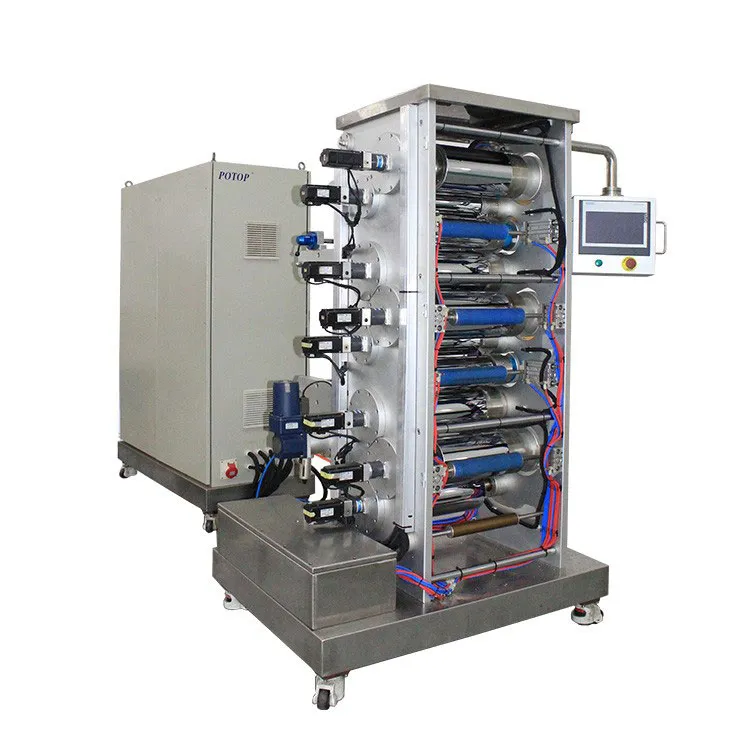


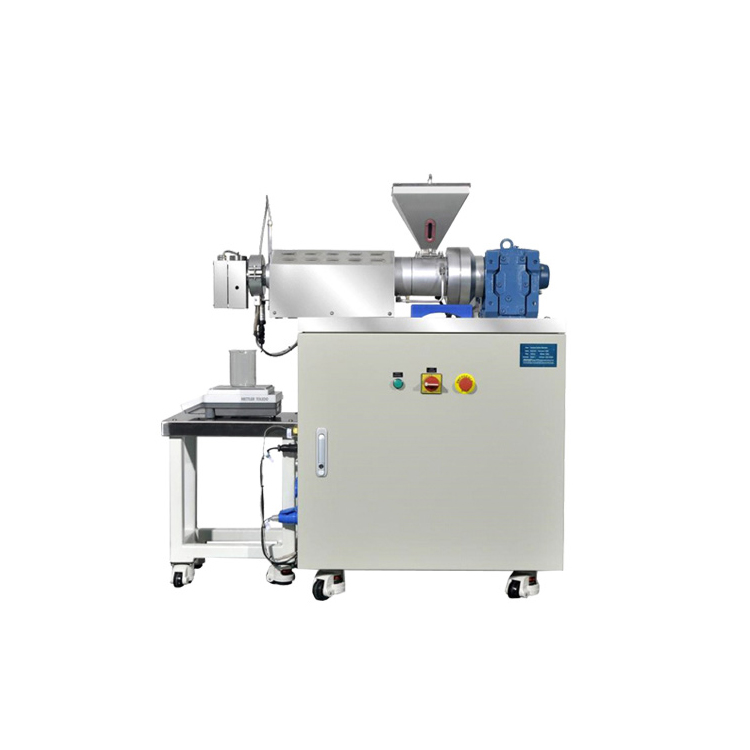
An extruder machine (extrusion machine) is a core piece of equipment in modern manufacturing used to melt, mix, and continuously shape materials through a die into products such as films, sheets, pipes, tubes, profiles, and pellets. From food packaging films and medical-grade tubing to photovoltaic encapsulation materials and microelectronic components, extrusion enables high-efficiency, scalable production with stable quality.
This guide explains what extruder machines are used for, how they work, which industries rely on them, how to select materials and machine types, and how advanced systems—such as those developed by POTOP (founded in 2009)—improve process stability, automation, and product consistency.
Extruder machines are used to:
Convert raw materials (commonly thermoplastic pellets) into continuous shapes via a die
Produce high-volume products continuously (rather than batch molding)
Control product dimensions and properties through temperature, pressure, screw design, and material formulation
Typical extruded products include:
Plastic film & blown film (packaging, barrier films)
Sheet (thermoforming, liners)
Pipe & tubing (water, medical, industrial)
Profiles (window frames, seals, cable ducts)
Cable coating & insulation
Compounding & pelletizing (masterbatch, filled polymers)
In advanced packaging and film production systems, manufacturers often adopt multilayer technologies such as 3 layer extrusion machine, and even 5 layer blown film machine to achieve better barrier and mechanical performance.
An extrusion line shapes material by combining heat + shear + pressure and forcing it through a precision die.
Main components
Hopper/feeder: feeds pellets, powder, regrind, or additives
Screw(s): transports, compresses, melts, mixes
Barrel & heaters: stabilize melt temperature zones
Screen changer / melt filter (optional): removes contaminants, stabilizes flow
Die: forms the final shape (film, sheet, pipe, profile, etc.)
Downstream equipment: cooling, haul-off, sizing, winding/cutting, thickness measurement
Process flow
Feeding: raw material enters the hopper
Melting & plasticizing: screw rotation generates shear; barrel heaters assist melting
Mixing & pressurizing: melt becomes uniform in temperature and composition
Shaping through the die: melt exits as a continuous profile
Cooling & finishing: product is cooled, sized, pulled, and wound/cut
Why it matters: extrusion's value is its ability to deliver continuous production, tight dimensional control, and repeatable material performance—critical for packaging, electronics, medical, and energy applications.
Best for:
Film/sheet/pipe/profile with standard polymers
Processes where mixing demands are moderate
Advantages:
Simple structure, cost-effective, stable output
Best for:
Compounding (filled polymers, masterbatch, flame retardant, recycled blends)
Materials needing strong dispersive + distributive mixing
Advantages:
Better mixing, better control of additives/fillers, stronger process flexibility
POTOP designs extrusion systems aligned with different polymer tasks—supporting both product extrusion and material compounding requirements with precision-focused engineering.
Extruders are widely used to produce:
Single-layer and multi-layer films
Barrier films (moisture/oxygen protection)
Heat-sealable packaging layers
Why extrusion is chosen:
Continuous output, consistent thickness
Layer customization for shelf-life performance
In solar and photovoltaic manufacturing, extrusion supports thin films and functional polymer layers that can impact:
Encapsulation performance
Moisture resistance and durability
Long-term stability under heat and UV
Extrusion is used for:
Medical-grade tubing and small-diameter pipes
Components requiring tight tolerances and stable material behavior
Key focus:
Material purity, dimensional accuracy, controlled processing windows
Applications include:
Cable insulation/sheathing
Precision polymer parts and casings
Profiles requiring consistent geometry and surface quality
Extrusion supports production of:
Chemical-resistant pipes and profiles
Heat-resistant parts and functional materials for harsh environments
Material selection determines:
Mechanical strength, flexibility, impact resistance
Barrier performance (moisture/oxygen)
Heat resistance, chemical resistance, aging performance
Process stability (melt strength, viscosity, die swell)
Common extrusion materials:
PE (LDPE/LLDPE/HDPE): films, pipes, packaging
PP: sheets, packaging, industrial parts
PVC: profiles, pipes (requires careful thermal control)
PET: sheets, packaging (drying and moisture control are critical)
EVA/POE and functional blends: films and energy-related layers
Engineering plastics (application-specific): higher temperature and performance needs
POTOP emphasizes customized polymer processing—supporting clients with formulation compatibility, processing stability, and equipment matching, especially when additives, fillers, or recycled content are involved.
Extrusion is favored for industrial-scale manufacturing because it enables:
Continuous production: high output with fewer stops
Lower waste: stable melt flow and automated control reduce scrap
Consistent quality: controlled temperature zones + pressure stability
Customization: die design and screw configuration adjust product properties
Automation potential: sensors, closed-loop control, and monitoring improve repeatability
Modern systems increasingly integrate:
Real-time temperature/pressure monitoring
Thickness/weight control (for film/sheet)
Energy-efficient heating and optimized screw design
Data logging for quality traceability
POTOP extruder solutions focus on precision temperature control and automation, helping manufacturers maintain stable production and competitive costs.
When evaluating an extruder for your production line, consider:
Product type: film, sheet, pipe, profile, pelletizing, coating
Material system: virgin resin, recycled blends, filled compounds, additives
Output requirement: kg/h target and line speed
Dimensional tolerance: thickness stability, roundness, surface finish
Mixing needs: single-screw vs twin-screw; screw L/D and design
Automation level: closed-loop control, monitoring, quick changeover
Downstream equipment matching: cooling, haul-off, winder/cutter, sizing
Maintenance and uptime: wear resistance, easy cleaning, spare parts support
Q1: What is extrusion used for?
Extrusion is used to produce continuous products—such as films, sheets, pipes, tubing, and profiles—by forcing melted material through a shaped die.
Q2: What products are made by extruder machines?
Common products include packaging films, barrier films, plastic pipes, medical tubing, cable insulation, plastic sheets for thermoforming, and compounded pellets.
Q3: Why use an extruder instead of injection molding?
Extrusion is ideal for continuous shapes and high-volume output, while injection molding is better for discrete parts produced in cycles.
Q4: What's the difference between single-screw and twin-screw extruders?
Single-screw is typically used for standard extrusion with moderate mixing needs; twin-screw is preferred for compounding and complex formulations requiring stronger mixing and control.
Extruder machines are essential to modern manufacturing because they enable continuous, efficient, and highly controllable shaping of materials, supporting industries such as packaging, renewable energy, medical, microelectronics, and petrochemicals. By selecting the right extruder type, materials, and automation level, manufacturers can achieve consistent quality, reduced waste, and scalable output.
As a polymer processing equipment manufacturer established in 2009, POTOP continues to advance extrusion technology with solutions built around precision control, reliability, and process customization, helping manufacturers meet evolving demands for performance and sustainable production.