Address:
202,101, No. 3, Kaifa Road, Dalong Street ,Panyu District, Guangzhou, Guangdong Focus On Polymer New Molding Equipment


WHAT ARE YOU LOOKING FOR?


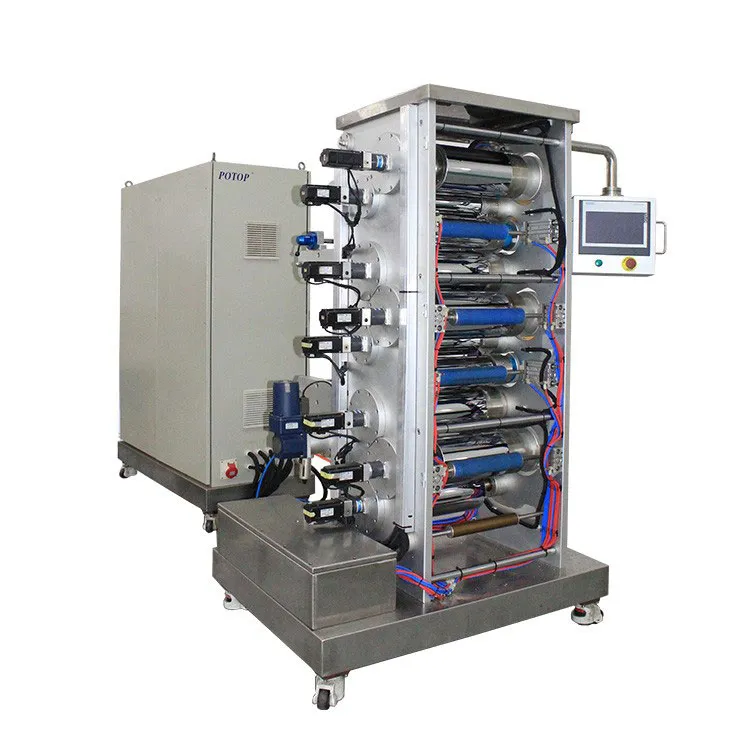


A film blowing machine is one of the most widely used systems in polymer processing, producing plastic films for packaging, agriculture, hygiene, and industrial protection. Because film quality depends on stable melt flow, accurate bubble control, and consistent cooling and winding, understanding each component—and how the parts interact—helps manufacturers reduce scrap, improve output consistency, and plan maintenance and upgrades more effectively. This article explains the main parts of a film blowing machine, what each part does in the blown film extrusion process, and how engineering improvements from POTOP support higher precision, efficiency, and long-term reliability.
In polymer development and film formulation stages, polymer lab equipment, torque rheometer, and biaxial tensile tester are commonly used to evaluate melt rheology, mechanical strength, and film performance before scaling up production. These laboratory tools help optimize resin selection and processing conditions for stable 3 layer blown film extrusion process development.
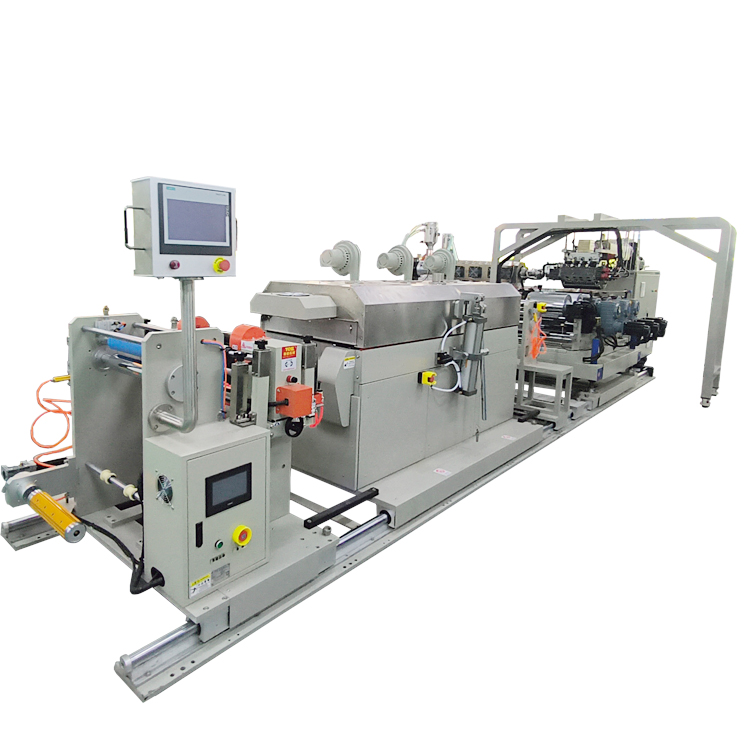
A film blowing machine is built around a coordinated set of modules that transform polymer pellets into a finished film roll. The process begins with the extruder system, which feeds, melts, and homogenizes the polymer to create a stable, uniform melt. From there, the melt enters the die head, where it is distributed evenly and shaped into a thin tubular melt curtain. Because the die directly influences thickness uniformity and output stability, its machining accuracy and thermal balance are critical to high-quality film production.
After the melt exits the die, the system introduces air through the air ring and blow-up air path, inflating the tube into a controlled bubble. Bubble stability determines film width, thickness distribution, and mechanical performance. The bubble is then solidified through a cooling system, typically combining external air cooling and (in many lines) internal bubble cooling for higher output and better gauge control. Finally, the film passes through nip rollers and a collapsing frame to flatten the bubble into a layflat web, after which a winding system converts the film into finished rolls with controlled tension and alignment. In modern lines, these modules are increasingly integrated with automation, sensors, and control software—areas where POTOP focuses on improving process repeatability and operator usability.
Each component of a film blowing machine contributes to a specific stage of film formation and quality control. The extruder determines how consistently the polymer is melted and mixed; screw design, barrel temperature zoning, and stable output pressure all affect film clarity, strength, and thickness stability. POTOP’s extrusion solutions emphasize energy-efficient heating control and melt stability, helping manufacturers process multiple polymer grades with fewer fluctuations and less waste.
The die head is responsible for distributing the melt uniformly around the circumference. When distribution is uneven, the result is gauge variation and poor roll quality. Die thermal control, flow channel design, and precise machining are therefore central to producing film with predictable thickness and performance. Next, the air ring and bubble-forming system inflate and stabilize the bubble. Air volume and pressure must match output rate and polymer melt strength; otherwise, the bubble can “breathe,” flutter, or become unstable, leading to thickness variations and surface defects.
The cooling system locks in film properties as the polymer transitions from melt to solid. Cooling uniformity influences haze, gloss, shrink behavior, and tensile strength, and it is especially important for films used in food packaging and medical-related applications where consistency is non-negotiable. After cooling, the collapsing frame, nip rollers, and haul-off section control web tracking and line speed, ensuring the film is flattened smoothly and transported without wrinkles or edge damage. Finally, the winder produces rolls with consistent tension, hardness, and edge alignment, preventing telescoping, blocking, or surface marks that can create downstream converting problems.
Film blowing performance is strongly influenced by how well the system balances melt stability, airflow control, cooling capacity, and winding precision. An optimized extruder can increase throughput while maintaining stable melt pressure, which reduces gauge variation and improves productivity. Likewise, a well-designed die head and airflow system reduce thickness deviation and minimize scrap, directly lowering unit cost.
Modern film blowing machines also increasingly rely on digital monitoring and operator-friendly interfaces. Real-time control over temperature, screw speed, line speed, bubble diameter, and winding tension allows faster troubleshooting and more consistent results across shifts. POTOP integrates automation and control features that simplify operation while supporting tighter process control, which is particularly valuable for manufacturers producing films that require stable thickness, consistent sealing behavior, and predictable mechanical properties.
Even well-built film blowing lines face recurring challenges that typically trace back to material behavior, wear, contamination, or insufficient control resolution. Material compatibility is a frequent issue: different polymers (or recycled blends) may require different temperature profiles, screw designs, and cooling strategies. When settings are not matched to the resin, problems such as melt fracture, unstable bubbles, or poor clarity can occur. POTOP addresses these needs through customized configurations that align the extruder, die, and cooling system with the target polymer and film structure.
Wear and maintenance are another major factor. Over time, the extruder screw and barrel can wear, reducing melting efficiency and increasing output instability. Dies and screens can accumulate degradation residues or contamination, affecting flow balance and film surface quality. Cooling components and air paths can also lose efficiency due to dust buildup or airflow imbalance. In addition, scalability can become difficult if the original line was not designed for higher output or advanced control features. Through engineering upgrades and robust system design, POTOP supports manufacturers in improving uptime and maintaining stable production as capacity demands increase.
Consistent maintenance is one of the most cost-effective ways to protect film quality and avoid unplanned downtime. Regular inspection of the die head and extruder screw helps identify early wear, resin buildup, or flow-related issues before they cause gauge instability. Proper lubrication and alignment checks in the winding and haul-off sections reduce vibration and tension fluctuations, which can otherwise create wrinkles, roll defects, or inconsistent roll hardness.
Calibration is equally important. Periodic verification of temperature sensors, pressure readings, and tension control ensures the machine’s displayed settings match real operating conditions. Cleaning schedules should be treated as production-critical, not optional: polymer residues, degraded material, or contamination in the melt path can lead to gels, black specks, and unstable flow. Establishing standardized cleaning and inspection routines supports the operational reliability and long-term performance standards emphasized by POTOP.
A film blowing machine is a tightly integrated system where each part—from the extruder and die head to the bubble control, cooling, haul-off, and winder—directly affects film uniformity, productivity, and finished roll quality. Understanding how these components work together helps manufacturers improve process stability, reduce scrap, and make better decisions about maintenance and upgrades. POTOP continues to advance blown film extrusion technology through precision engineering and automation-focused design, enabling producers to manufacture high-quality films across diverse applications while staying competitive in global markets.