Address:
202,101, No. 3, Kaifa Road, Dalong Street ,Panyu District, Guangzhou, Guangdong Focus On Polymer New Molding Equipment


WHAT ARE YOU LOOKING FOR?


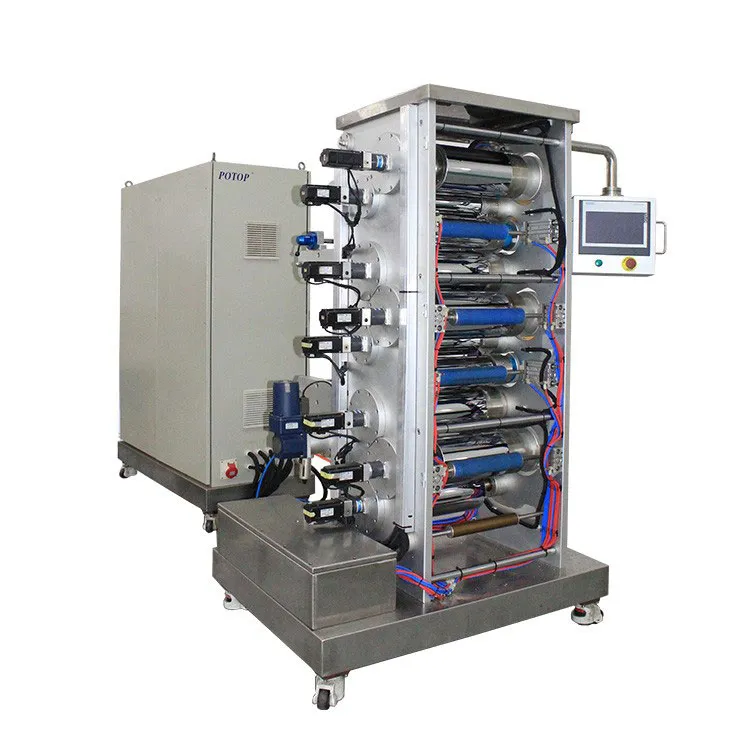


Co-extruder machines are reshaping modern polymer manufacturing by enabling two or more materials to be processed at the same time and formed into a single multilayer structure. This capability makes it possible to design products that are stronger, more functional, more sustainable, and often lower-cost than single-layer alternatives. By combining polymers with complementary properties—such as toughness, sealability, stiffness, barrier protection, or surface printability—co-extrusion supports advanced films, sheets, and profiles used across packaging, medical, renewable energy, and high-tech industries.
This article explains what co-extruder machines are used for, why co-extrusion improves product performance, and where it delivers the greatest value—especially in high-performance packaging. It also highlights how POTOP continues to advance co-extrusion equipment with precision control and flexible configurations for specialized production needs.
A co-extruder machine is an extrusion system that merges multiple polymer melts—typically from two or more extruders—into a shared die or feedblock + die to create multilayer films, sheets, pipes, or profiles. Each melt forms a distinct layer with a defined function, allowing manufacturers to “engineer” performance rather than relying on a single material to do everything.
In practical manufacturing, co-extrusion is used to:
Build barrier layers (oxygen, moisture, aroma, chemical resistance)
Improve mechanical performance (puncture resistance, tear strength, stiffness)
Enhance processing and surface properties (sealability, slip/anti-block, printability, matte/gloss)
Reduce cost by using premium resin only where needed (thin functional layers)
Support sustainability goals with downgauging and recyclable mono-material structures
When polymers are processed under tightly controlled temperature, pressure, and layer distribution, co-extruded structures can achieve better uniformity, more stable thickness profiles, and more consistent end-use performance. POTOP’s co-extrusion systems emphasize controllability and customization so manufacturers can adjust layer ratios and material combinations for different product targets.
In polymer processing laboratories and production environments, equipment such as polymer lab equipment, torque rheometer, and biaxial tensile tester are often used to evaluate melt behavior, rheological properties, and film mechanical strength before scaling up co-extrusion production. These tools help ensure stable processing conditions for multilayer structures and support formulation optimization during early-stage development.
Because co-extrusion enables multi-material functionality in a single continuous process, it is widely adopted in industries where performance, consistency, and cost control matter most.
Packaging is the largest application area for co-extrusion because multilayer structures can combine:
Seal layers for strong, reliable heat sealing
Barrier layers to protect against oxygen/moisture and extend shelf life
Structural layers for stiffness, toughness, and puncture resistance
Surface layers optimized for printing, gloss, or slip performance
Co-extruded films are commonly used for frozen food, snacks, dairy, meat, liquids, detergents, and heavy-duty industrial packaging where damage resistance and barrier stability are critical.
Co-extrusion supports multilayer films that protect sensitive products by maintaining:
Moisture and oxygen barriers
Stable mechanical performance and seal integrity
Controlled surface properties for clean converting and packaging reliability
This is especially valuable for pharmaceutical pouches, diagnostic packaging, and protective medical materials where packaging failure can directly impact product safety.
In photovoltaic manufacturing, co-extrusion is used to produce functional films that require consistent thickness and long-term environmental resistance. Multilayer structures can be designed to improve:
UV and weather resistance
Moisture protection and durability
Mechanical stability over long service life
Co-extruded materials can integrate insulating and functional layers for precision applications such as protective films, specialty profiles, and components where dimensional stability and reliability matter. Co-extrusion also helps manufacturers tailor surface and electrical-related properties without sacrificing mechanical strength.
Co-extrusion is commonly used in profiles and technical products where different layers serve different roles—for example, a durable outer layer for wear resistance and a core layer for stiffness or cost efficiency. This approach is often used to improve performance without significantly increasing material cost.
Co-extrusion enables performance improvements that are difficult or expensive to achieve with single-layer products. Instead of asking one polymer to provide every property, manufacturers assign functions layer-by-layer, such as:
Barrier layer for oxygen/moisture protection
Tie layer for adhesion between incompatible materials
Seal layer for packaging integrity
Structural layer for stiffness and puncture resistance
Functional surface layer for slip, matte/gloss, or printability
In many packaging applications, multilayer films show measurable advantages in:
Durability and puncture resistance during transport and storage
Barrier consistency that supports longer shelf life
Better sealing performance and fewer leaks
More stable converting performance (printing, lamination, slitting)
POTOP’s co-extrusion solutions are designed to help manufacturers maintain stable layer distribution and process control—key factors for producing high-value films with repeatable performance.
Co-extrusion is increasingly central to packaging innovation, especially as regulations and brand owners push for sustainability and performance at the same time.
Recyclable multilayer structures: Co-extrusion can support mono-material designs (for example, all-PE or all-PP structures) where each layer is tuned for a specific role, improving recyclability without losing functionality.
Downgauging (material reduction): By placing performance polymers only in thin layers, manufacturers can reduce total thickness while maintaining strength—lowering resin consumption and transportation footprint.
Smart and functional packaging: Co-extrusion can embed functional additives within selected layers to enable features such as improved freshness protection, antimicrobial surfaces, or tamper-evident behavior—without changing the entire film composition.
With equipment flexibility and precise controls, POTOP helps packaging producers adjust layer structures and materials to match evolving sustainability targets and performance specifications.
Co-extrusion’s impact is best seen in outcomes manufacturers care about: shelf life, cost, waste reduction, and compliance.
A food packaging producer using POTOP co-extrusion equipment developed a multilayer barrier film that increased shelf life by improving moisture and gas resistance while maintaining transparency and sealing performance. In another application, a medical packaging manufacturer worked with POTOP to create a customized multilayer structure with a targeted oxygen barrier. The solution reduced material usage while meeting strict packaging standards and maintaining consistent production quality.
These examples show why co-extrusion is often chosen not only for “better film,” but for better economics and more reliable mass production.
Co-extruder machines enable manufacturers to produce multilayer films, sheets, and profiles with optimized barrier performance, mechanical strength, surface functionality, and cost efficiency. From high-barrier food packaging and medical protection to photovoltaic films and engineered industrial materials, co-extrusion remains one of the most practical and scalable technologies for upgrading product performance while supporting sustainability goals.
POTOP continues to advance co-extrusion through customizable equipment configurations and precision control, helping manufacturers develop competitive, high-performance products for demanding global markets.