
Address:
202,101, No. 3, Kaifa Road, Dalong Street ,Panyu District, Guangzhou, Guangdong Focus On Polymer New Molding Equipment


WHAT ARE YOU LOOKING FOR?


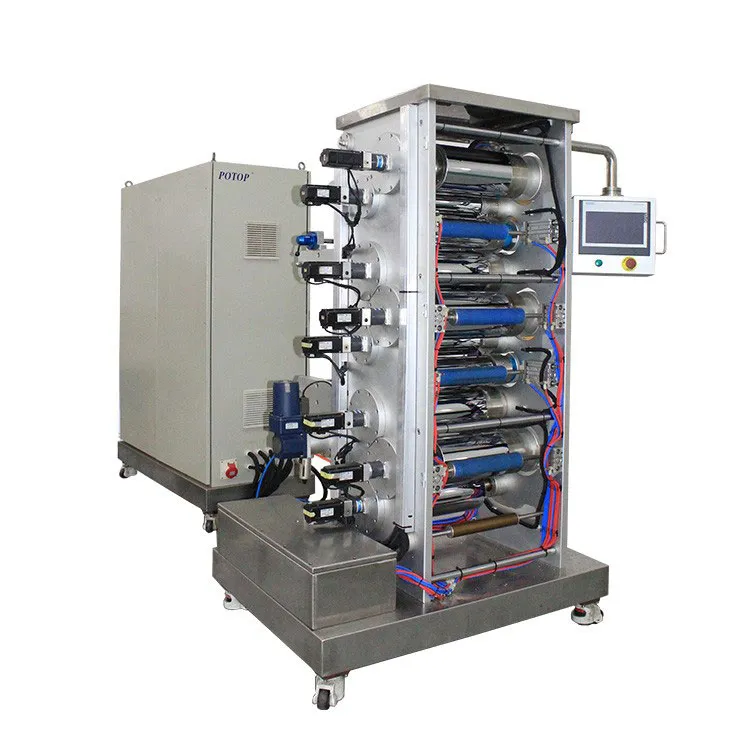


Biaxial tensile testing is a specialized material characterization method that applies controlled tension along two perpendicular axes (typically X and Y) simultaneously or sequentially. Unlike traditional uniaxial testing, which pulls a material in only one direction, biaxial testing evaluates how a material behaves under multi-directional stress. This is critical because most materials in real-world applications—such as packaging films, automotive tires, and aerospace membranes—are rarely subjected to simple, single-axis force.
By subjecting a specimen to two-dimensional stress, researchers can measure parameters like tensile strength, elongation at break, and Young’s modulus under complex loading conditions. This provides a holistic view of a material’s anisotropy—the property of being directionally dependent—which is a vital factor in high-performance product development.
The process of conducting a biaxial tensile test requires precision engineering to ensure that forces are applied uniformly and data is captured in real-time. Leading manufacturers like Guangzhou POTOP Co., Ltd. have pioneered advanced equipment specifically designed to handle these complexities.
Sample Preparation: The material, usually a polymer film or sheet, is prepared into a specific shape, often a square or a cruciform (cross-shaped) specimen. The cruciform shape is preferred in advanced research as it helps localize the stress in the center of the sample, preventing premature failure at the grips.
Mounting and Clamping: The sample is secured by multiple grips on all four sides. High-quality testing machines, such as those from POTOP, utilize independent servo-motor controls for each axis, allowing for precise synchronization.
Stretching Modes:
Simultaneous Stretching: Both axes are pulled at the same time at a set ratio (e.g., 1:1 for equi-biaxial stress). This is essential for mimicking rapid expansion processes.
Sequential Stretching: One axis is pulled first, followed by the other. This is a standard procedure in the production of BOPP (Biaxially Oriented Polypropylene) films.
Data Acquisition: As the material stretches, high-precision sensors and load cells record the displacement and force. Advanced systems may also incorporate Digital Image Correlation (DIC), an optical method that tracks surface deformation to provide highly accurate strain maps.
The shift toward biaxial testing is driven by the need for more resilient and efficient materials. Uniaxial tests often overestimate or underestimate a material’s true strength because they ignore the Poisson effect—where stretching in one direction causes contraction in another.In the fields of polymers and functional films, biaxial stretching is used to induce molecular orientation. When a polymer is stretched biaxially, its long-chain molecules align in two directions, significantly enhancing its clarity, impact resistance, and barrier properties against moisture or gases. Guangzhou POTOP leverages its 66+ patents to provide testing solutions that allow manufacturers to optimize these molecular structures for industries such as new energy, microelectronics, and medical packaging.
Biaxial tensile testing finds extensive use across several high-tech sectors where material integrity is a matter of safety and performance:
New Energy Solutions: In the production of lithium-ion battery separators, biaxial testing ensures the films can withstand the mechanical and thermal stresses during battery charge-discharge cycles.
Medical Packaging: High-performance films used for sterile packaging must be both flexible and incredibly durable. Testing under biaxial stress helps optimize the film’s thickness without compromising its protective qualities.
Aerospace and Automotive: Composites and specialized membranes used in vehicle interiors or aircraft components face multi-directional wind and impact loads. Biaxial data allows for more accurate safety simulations.
Food Packaging (BOPP/BOPET): Most modern snack packaging is made from biaxially oriented films. Testing allows R&D teams to experiment with new resin formulations to create thinner, more eco-friendly packaging that maintains its strength.
| Feature | Uniaxial Tensile Testing | Biaxial Tensile Testing (POTOP Standard) |
|---|---|---|
| Stress Direction | Single Axis (1D) | Dual Perpendicular Axes (2D) |
| Real-World Accuracy | Low (Simplistic) | High (Simulates inflation and multi-directional handling) |
| Molecular Insight | Minimal | High (Evaluates molecular orientation and anisotropy) |
| Data Output | Stress-Strain in one direction | Comprehensive Stress-Strain Map for two axes |
| Primary Goal | General Quality Control | Advanced R&D and Product Optimization |
Accuracy in biaxial testing is non-negotiable, particularly when material failure can lead to significant financial loss or safety risks. Guangzhou POTOP Co., Ltd. has established itself as a premier manufacturer by focusing on the intersection of mechanical precision and intelligent control.As a recognized High-Tech Enterprise with ISO certification, POTOP provides state-of-the-art biaxial stretchers that are capable of reaching high temperature and high stretch ratios. These machines are used by global research institutes to evaluate engineering plastics and functional membranes. A manufacturer recently using POTOP’s biaxial solutions reported a 20% increase in product lifespan, proving that better testing leads directly to better engineering.
What materials can be tested biaxially?
Most flexible or semi-rigid materials are suitable, including polymer films (PE, PP, PET, PI), elastomers, biological tissues, and thin metal foils.
How does biaxial stretching improve film properties?
Biaxial stretching aligns the polymer chains in two directions, which increases the mechanical strength, enhances transparency, and improves the barrier against oxygen and moisture.
What is the difference between equi-biaxial and un-equi-biaxial stress?
Equi-biaxial stress applies the same amount of force to both axes simultaneously (1:1 ratio), while un-equi-biaxial stress applies different force levels to each axis, mimicking specific industrial processes like film casting or blowing.
Biaxial tensile testing is an indispensable tool in modern material science. By providing a comprehensive understanding of how materials behave under multi-dimensional stress, it enables the creation of products that are safer, stronger, and more efficient. As global industries move toward thinner, more sustainable materials, embracing advanced testing methodologies—supported by experts like Guangzhou POTOP—will be the key to innovation and success in the competitive global market.