Address:
202,101, No. 3, Kaifa Road, Dalong Street ,Panyu District, Guangzhou, Guangdong Focus On Polymer New Molding Equipment


WHAT ARE YOU LOOKING FOR?


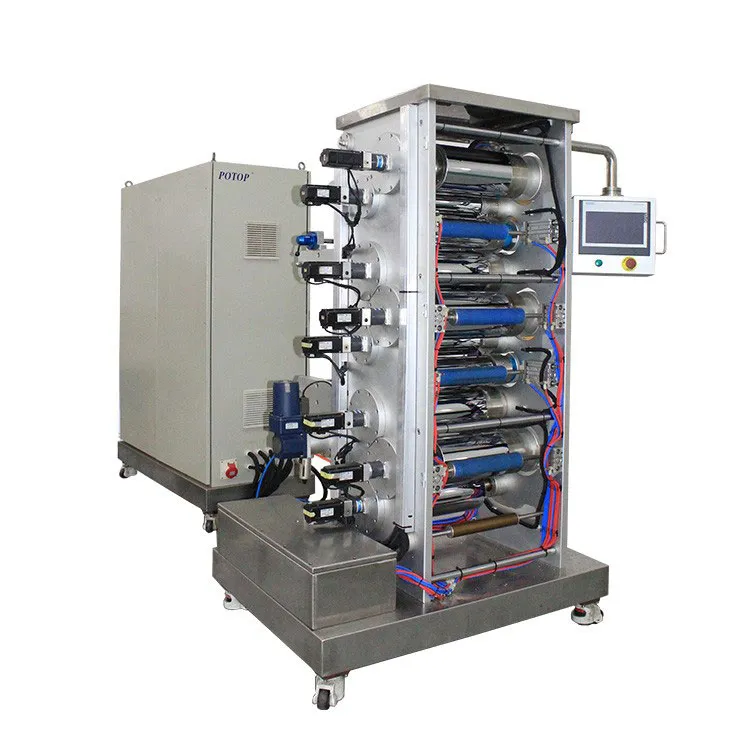


Producing high-quality polymer films requires more than simply melting resin and forming a thin layer. Film thickness uniformity, optical clarity, and cooling efficiency all depend on how accurately each stage of the manufacturing process is controlled. The cast film extrusion process is widely used for producing plastic films with consistent thickness, smooth surfaces, and excellent transparency for packaging, medical, electronic, and industrial applications.
Unlike other film production methods, cast extrusion allows manufacturers to precisely manage melt flow, die conditions, and cooling parameters. By optimizing these factors, engineers can improve film quality and reduce defects before moving into large-scale production.
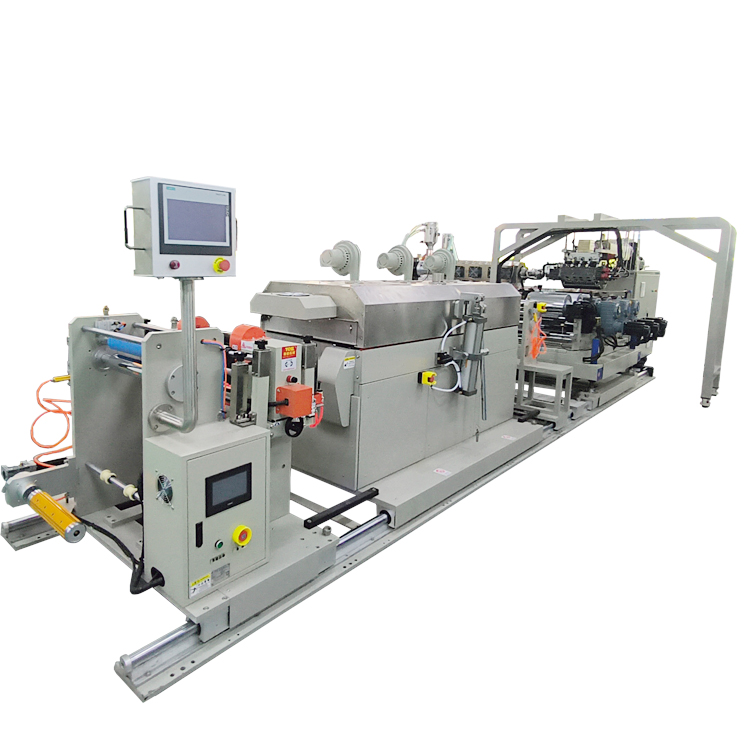
A modern cast film extrusion machine provides valuable control over temperature, speed, and thickness, helping researchers and manufacturers develop stable production conditions. Understanding the relationship between extrusion parameters and final film performance is essential for achieving reliable results.
The cast film extrusion process involves several connected stages, and each stage influences the final characteristics of the film. From polymer melting to final cooling, small changes in processing conditions can affect thickness distribution, transparency, and mechanical properties.
A typical Cast Extrusion Process begins when polymer pellets are fed into an extruder, where heat and mechanical force melt the material into a uniform polymer melt. The molten polymer then passes through a flat die to form a continuous film sheet before being cooled and collected.
The main stages include:
Material melting and homogenization: The polymer resin is heated and mixed inside the extruder to create a stable melt with consistent temperature and viscosity.
Die extrusion and film forming: The molten polymer exits through the die opening, where the melt thickness and width are initially determined.
Cooling and solidification: The hot film contacts a chilled roll that rapidly removes heat and controls surface quality.
Film winding and inspection: The finished film is collected and evaluated for thickness, clarity, and other performance characteristics.
Each step requires accurate control. An unstable melt temperature or uneven cooling condition can create defects such as thickness variation, wrinkles, or poor transparency.
Melt temperature is one of the most important parameters in the cast film extrusion process because it directly affects polymer flow behavior. If the temperature is too low, the material may not flow evenly through the die. If it is too high, polymer degradation or unwanted changes in film properties may occur.
Die gap control is equally important. The opening between the die lips determines how much polymer enters the forming stage. Uneven die gaps can create thickness differences across the film width, reducing product consistency.
A well-designed cast film extruder helps maintain stable pressure and temperature during extrusion. This allows operators to achieve better control over melt uniformity and reduce variations caused by unstable processing conditions.
Cooling is a critical stage in cast film production because it determines how quickly the polymer structure freezes after extrusion. The chill roll temperature affects crystallization behavior, surface smoothness, and optical performance.
For transparent films, cooling conditions must be carefully adjusted. Rapid and uniform cooling can improve clarity by controlling polymer morphology and preventing surface defects. However, incorrect cooling rates may result in haze, uneven appearance, or reduced mechanical performance.
The cooling system of a cast film extrusion machine is designed to provide consistent heat removal across the film surface. Factors such as roll temperature, contact pressure, and film speed must work together to maintain stable production.
| Process Factor | Effect on Film Quality | Possible Issues |
|---|---|---|
| Melt Temperature | Controls polymer flow consistency | Poor extrusion stability |
| Die Gap Uniformity | Influences thickness distribution | Uneven film thickness |
| Chill Roll Temperature | Affects clarity and surface quality | Haze or defects |
| Cooling Speed | Determines film structure | Stress and deformation |
For manufacturers developing new film materials, laboratory-scale evaluation before production is important. Testing different cooling conditions helps identify suitable processing windows and improves the reliability of future scale-up.
Thickness variation is one of the most common challenges in film extrusion. Even small differences across the film width can affect downstream processing, product appearance, and final application performance.
Several factors may contribute to uneven thickness:
Unstable melt pressure: Fluctuations inside the extrusion system can cause inconsistent material flow.
Improper die adjustment: Uneven die settings may create thicker areas near the edges or across the film surface.
Cooling imbalance: Different cooling rates can lead to uneven shrinkage and dimensional changes.
Edge bead is another common issue in cast film production. It occurs when the film edges become thicker than the center area due to melt behavior near the die exit. Although edge trimming can remove some excess material, controlling the extrusion conditions is a more efficient approach.
Using a precise cast film extrusion machine and monitoring key parameters can help reduce these problems. Laboratory analysis and process simulation also allow engineers to identify potential issues before commercial production.
Before investing in full-scale manufacturing, film developers often use laboratory equipment to evaluate extrusion conditions and material performance. Lab testing provides important information about how polymers respond to temperature, cooling rates, and processing speeds.
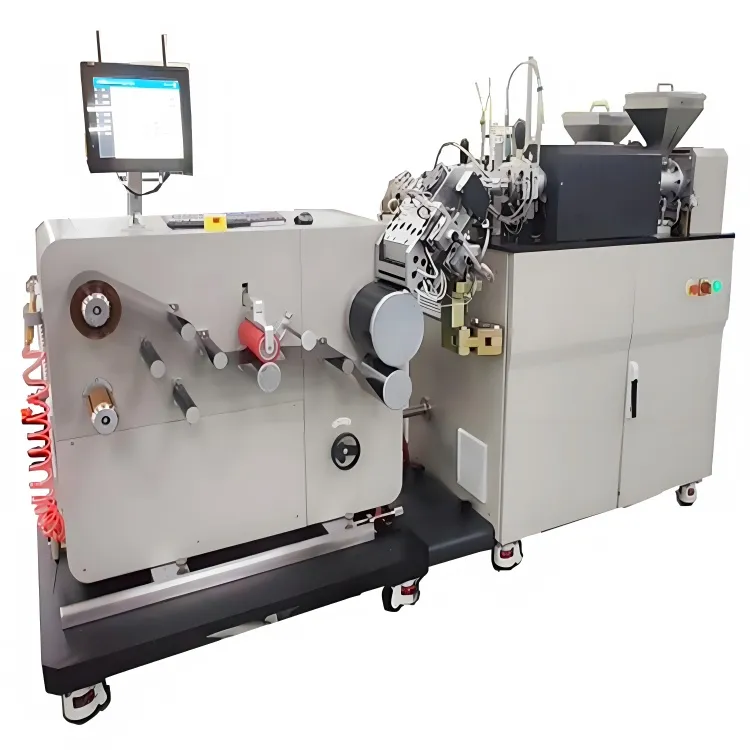
A laboratory cast film extrusion system allows researchers to test different resin formulations, optimize processing parameters, and evaluate film properties under controlled conditions.
Process verification: Engineers can confirm whether extrusion settings produce the expected thickness, clarity, and surface quality.
Material development: Researchers can compare different polymer grades and additives before selecting the best formulation for production.
This testing stage helps reduce production risks and improves efficiency during scale-up. By understanding how variables influence film quality, manufacturers can develop more stable and cost-effective production processes.
POTOP-LAB provides laboratory film extrusion and material evaluation solutions designed to support polymer research and product development. Through controlled testing and accurate process analysis, researchers can optimize film performance before entering industrial manufacturing.
Common materials include PE, PP, TPU, and other thermoplastic polymers used for functional and packaging films.
Cast extrusion uses a flat die and chill roll, while blown film uses an air bubble forming process.
Common causes include unstable melt flow, improper die adjustment, and uneven cooling.
Optimizing melt temperature, cooling conditions, and material formulation can improve transparency.
It helps verify processing conditions and reduces risks when scaling up to commercial production.