
Address:
202,101, No. 3, Kaifa Road, Dalong Street ,Panyu District, Guangzhou, Guangdong Focus On Polymer New Molding Equipment


WHAT ARE YOU LOOKING FOR?




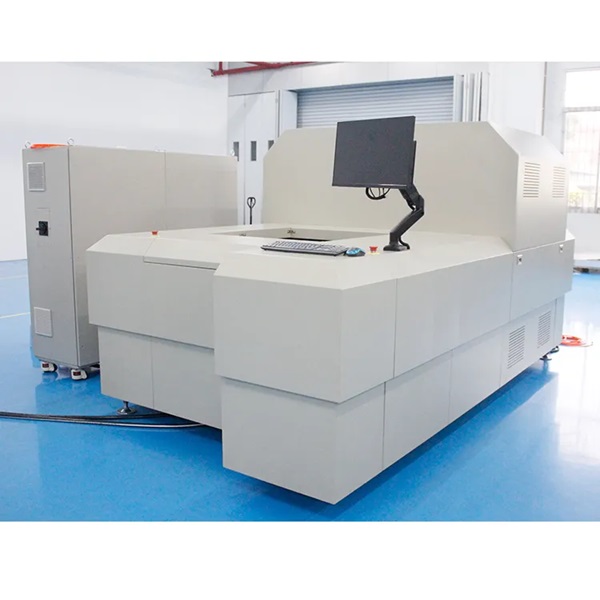
Selecting the right stretching method is one of the most important decisions in polymer film development. Different orientation processes directly influence tensile strength, dimensional stability, optical performance, and final application suitability. Among various film processing technologies, machine direction orientation and biaxial orientation are two commonly studied approaches for improving polymer film properties.
For researchers developing packaging materials, functional films, and advanced polymer products, understanding the difference between these two methods helps determine the most suitable process and testing strategy. While machine direction orientation improves molecular alignment along the film production direction, biaxial orientation creates a more balanced structure by stretching materials in both machine direction and transverse direction.
With the support of advanced laboratory equipment, such as biaxial stretching machine or other material evaluation systems, engineers can analyze how different stretching conditions affect film performance before moving into large-scale production.
Machine direction orientation is a stretching process where polymer films are elongated mainly along the direction in which the film travels during production. During this process, molecular chains inside the polymer become aligned along the stretching direction, improving specific mechanical properties.
The main purpose of machine direction orientation is to enhance strength, stiffness, and dimensional stability in the longitudinal direction. Because the molecular structure becomes more organized, MDO films often show improved resistance to deformation when forces are applied in the machine direction.
A typical MDO process involves heating the film to an appropriate temperature, stretching it through controlled rollers, and then cooling it to stabilize the new structure. Parameters such as stretching ratio, temperature, and drawing speed all influence the final film characteristics.
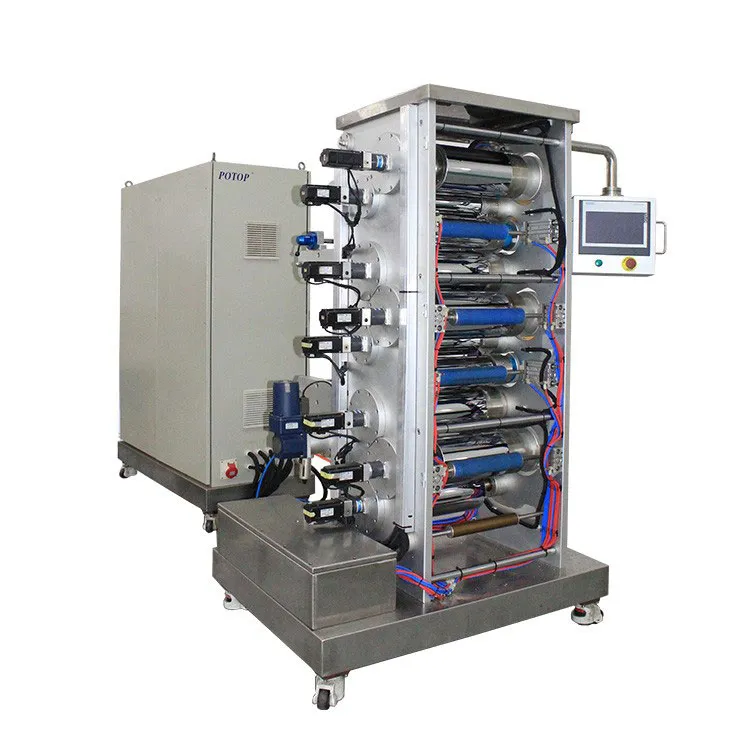
A laboratory mdo machine allows researchers to simulate this process under controlled conditions. By adjusting stretching parameters, engineers can study how polymer materials respond to different levels of orientation and identify the optimal processing window.
However, because the stretching mainly occurs in one direction, films produced through machine direction orientation may have different properties between the machine direction (MD) and transverse direction (TD). This directional difference is an important factor when selecting materials for specific applications.
Compared with machine direction orientation, biaxial orientation stretches polymer films along two axes: machine direction and transverse direction. This creates a more balanced molecular alignment and improves overall film performance.
Biaxially oriented films are widely used in applications that require excellent strength, transparency, barrier performance, and dimensional stability. Common examples include food packaging films, electronic materials, optical films, and specialty polymer products.
The advantage of biaxial orientation is that it reduces the imbalance often found in single-direction stretching. When polymer chains are aligned in both directions, the film can achieve more uniform mechanical properties and better resistance to external stress.
In research environments, a biaxial stretching machine helps evaluate how different stretching ratios and temperatures influence material behavior. This allows scientists to optimize film structures before industrial production.
Although biaxial orientation provides more balanced performance, it usually requires more advanced process control compared with machine direction orientation. Factors such as tension balance, temperature uniformity, and stretching speed must be carefully managed to achieve consistent results.
The key difference between machine direction orientation and biaxial orientation lies in how polymer chains are arranged. MDO creates stronger alignment in one direction, while biaxial orientation distributes molecular orientation across two directions.
Understanding these differences helps researchers choose the correct evaluation method. For example, a longitudinal tensile test is commonly used to analyze strength along the machine direction, while biaxial tensile testing provides information about multi-directional deformation behavior.
| Performance Factor | Machine Direction Orientation | Biaxial Orientation |
|---|---|---|
| Stretching Direction | Mainly machine direction | Machine and transverse directions |
| Molecular Alignment | One-direction orientation | Two-direction orientation |
| Strength Distribution | Higher MD strength | More balanced MD and TD strength |
| Process Complexity | Relatively simpler | More advanced control required |
| Typical Applications | Labels, tapes, directional films | Packaging, optical and barrier films |
For film R&D, selecting the right orientation method depends on whether the project requires directional performance or balanced mechanical properties.
The equipment used for machine direction orientation and biaxial orientation differs because the stretching mechanisms are different.
An MDO system mainly focuses on controlling film movement through rollers. It requires precise temperature regulation and speed coordination to ensure stable stretching performance. This makes it suitable for researchers studying directional reinforcement and process optimization.
Biaxial orientation equipment requires more complex control because the film must be stretched in two dimensions. A biaxial system must maintain consistent force distribution while controlling stretching ratio and thermal conditions.
For laboratories with limited sample quantities, a small tensile testing machine can be useful for preliminary mechanical evaluation. Combined with orientation equipment, it allows researchers to compare how different stretching processes affect film strength, elongation, and stability.
The selection of equipment should always match the research purpose. A project focused on directional strength may not require the complexity of biaxial evaluation, while advanced film development often benefits from multi-directional testing capabilities.
Choosing between machine direction orientation and biaxial orientation depends on the target application, required film performance, and development goals.
Machine direction orientation is suitable when:
High strength along one direction is required.
The application mainly experiences directional stress.
A simpler stretching process is preferred.
Improved stiffness and dimensional control are the main objectives.
Biaxial orientation is suitable when:
Balanced MD and TD properties are necessary.
The film requires high toughness and stability.
Multi-directional mechanical performance is important.
Advanced packaging or specialty applications are involved.
For example, industrial tapes and labels may benefit from machine direction orientation because their main loads occur along one direction. In contrast, packaging films and optical materials often require biaxial orientation because they need consistent performance in multiple directions.
The best choice is not always the most advanced technology. Instead, researchers should select the orientation method that matches the actual requirements of the final product.
Accurate testing is essential for understanding how orientation processes influence polymer performance. Without reliable measurement, it is difficult to determine whether changes in stretching conditions actually improve material properties.
Testing methods such as tensile analysis, biaxial tensile testing, and directional strength evaluation help researchers compare different film structures. These results provide valuable guidance for improving formulations, processing conditions, and final product quality.
For companies developing advanced polymer films, combining suitable orientation methods with reliable testing equipment creates a more efficient R&D workflow.
POTOP-LAB provides laboratory solutions for polymer film evaluation, helping researchers analyze mechanical performance during material development.
Advanced testing solutions for polymer films and stretching studies.
Equipment designed for accurate mechanical property evaluation.
Support for different film research requirements.
Professional assistance for laboratory testing applications.
By using reliable testing systems, researchers can better understand the relationship between processing conditions and material performance. Whether studying machine direction orientation, biaxial orientation, or other polymer stretching methods, accurate testing helps accelerate film innovation.
It improves strength and stiffness along the film production direction.
It provides balanced strength, stability, and barrier performance.
Temperature, stretching ratio, speed, and polymer structure all influence results.
Different testing methods may be required depending on the orientation direction and research goal.
It helps researchers evaluate performance before scaling up production.