Address:
202,101, No. 3, Kaifa Road, Dalong Street ,Panyu District, Guangzhou, Guangdong Focus On Polymer New Molding Equipment


WHAT ARE YOU LOOKING FOR?


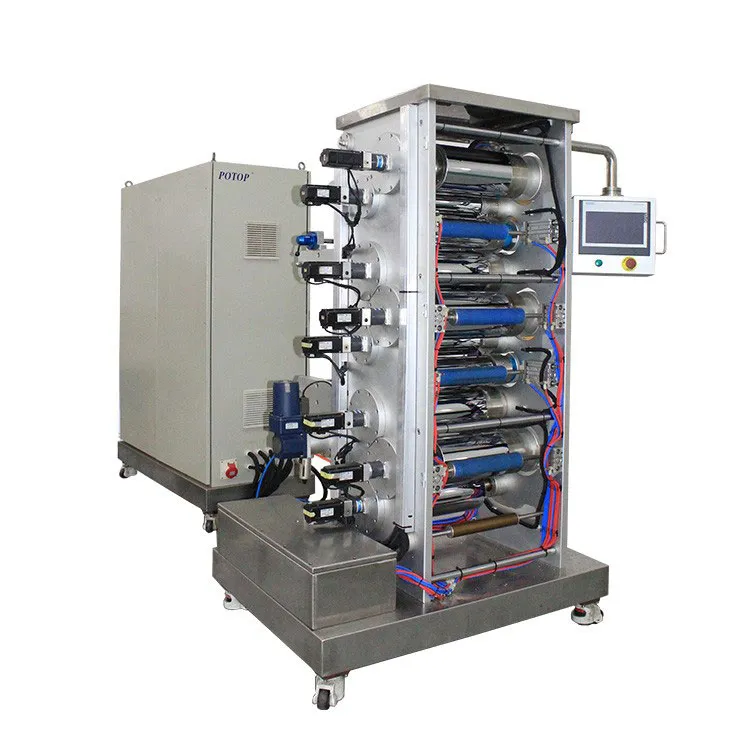


A rubber mixing mill is widely used for compound development, formulation testing, additive dispersion, color matching, mastication, sheet preparation, and production-scale rubber processing. Although most rubber mixing mills use two counter-rotating rolls, their capabilities vary considerably. Important differences include batch capacity, roll dimensions, friction-ratio control, nip-gap adjustment, heating and cooling methods, safety systems, process monitoring, and automation. A compact laboratory mill processing less than 1 kg per batch serves a different purpose from an industrial mill designed for batches exceeding 50 kg. Selecting the right manufacturer therefore requires more than comparing machine dimensions or motor power. This guide introduces ten rubber mixing mill manufacturers serving laboratory, pilot-scale, and industrial applications. It is intended for rubber processors, material laboratories, universities, compound developers, tire manufacturers, and engineering teams evaluating new mixing equipment.
Editorial disclosure: This article is published by POTOP, which is listed first as the featured manufacturer. The remaining companies are presented according to their application focus and publicly available product information. The numerical order should not be interpreted as an independent quality or market-share ranking.
The manufacturers in this guide were evaluated using information published on official company websites and product pages.
The main selection criteria included:
Availability of two-roll mills for rubber or elastomer processing
Laboratory, pilot, or industrial equipment coverage
Published roll dimensions and operating parameters
Roll-speed and friction-ratio control
Heating and cooling configurations
Nip-gap adjustment
Operator protection and emergency stopping systems
Process monitoring and data-recording capability
Custom engineering and auxiliary equipment
Technical service and spare-parts support
Public specifications may change as manufacturers update their equipment. A final procurement decision should be based on the latest technical proposal, safety documentation, material trial, acceptance criteria, and service agreement.
| Manufacturer | Location | Main Equipment Scale | Notable Capabilities | Suitable Applications |
|---|---|---|---|---|
| POTOP | China | Laboratory | Independent servo drives, data monitoring, temperatures up to 350°C | Formulation development and small-batch sample preparation |
| Labtech Engineering | Thailand | Laboratory and pilot | Several roll sizes and multiple heating or cooling methods | Rubber and polymer development |
| COLLIN Lab & Pilot Solutions | Germany | Laboratory and pilot | Recipe management, process-data display, motorized gap control | Repeatable development and quality-control trials |
| Servitec | Germany | Laboratory | POLYMIX laboratory mills and configurable systems | Research, training, and quality control |
| DEGUMA-SCHÜTZ | Germany | Industrial | Hydraulic gap adjustment, variable friction, torque-motor drives | Production-scale mixing, homogenizing, and sheeting |
| Buzuluk | Czech Republic | Laboratory to industrial | In-house roll casting, drilled cooling channels, hydraulic gap control | Customized heavy-duty mixing |
| Comerio Ercole | Italy | Laboratory to industrial plants | Mixing mills, internal mixers, stock blenders, and turnkey systems | Integrated rubber-processing projects |
| Bharaj Machineries | India | Laboratory to industrial | Wide roll-size range, hydraulic nip adjustment, stock blender options | Small batches through heavy production |
| Santosh Rubber Machinery | India | Laboratory to industrial | Uni-drive mills, multiple capacities, and supporting line equipment | Mixing, warming, feeding, and refining |
| Uttam Rubtech Machines | India | Industrial | Conventional and uni-drive rubber mixing mills | General rubber compounding and processing |
Headquarters: Guangzhou, China
Primary focus: Laboratory polymer-processing and material-testing equipment
Suitable for: Rubber formulation development, small-batch mixing, process observation, and research laboratories
POTOP manufactures laboratory equipment for polymer processing, film preparation, compounding, rheological testing, stretching, and rubber material development.
Its equipment range includes laboratory extruders, film-processing lines, torque rheometers, capillary rheometers, vulcanizing presses, and two-roll open mixing mills.
The POTOP Two Roll Open Mixing Mill is designed for laboratory-scale rubber and plastic processing. The LRHI-12/35 model has a published mixing capacity of 0.2–0.5 kg per batch, making it suitable for formulation screening where raw material consumption must be controlled.
Independent servo-motor drives for the front and rear rolls
Adjustable roll speeds from 0 to 30 rpm
Hard chrome-plated, mirror-finished rolls
Electric roll heating as the standard configuration
Optional oil or water roll-temperature control
Computer-based measurement and control
Real-time graphical display of operating data
Multiple mechanical and electrical safety protections
Adjustable roll gap from 0.1 to 5 mm
Published temperature-control range from room temperature to 350°C
The independent drives allow the speed of each roll to be controlled separately. This gives the laboratory greater flexibility when studying friction ratio, shear conditions, mixing intensity, and material residence on the rolls.
The computer-based control system also distinguishes the equipment from a basic manually operated mill. Process conditions can be monitored during each trial, helping technical teams compare formulations and operating parameters.
The POTOP laboratory mill can be used for:
Rubber and plastic formulation development
Mixing and plasticizing rubber compounds
Incorporating curing agents, fillers, pigments, and additives
Preparing rubber or plastic sheets for subsequent testing
Optimizing open-mill process parameters
Producing samples before compression molding or vulcanization
Studying the effects of roll temperature, speed, friction ratio, and gap
The mill can also be used alongside a laboratory rubber vulcanizing press to support compound preparation and molded-sample production.
POTOP is particularly relevant when a laboratory requires a compact rubber mixing mill that can be integrated with other polymer-processing and testing equipment. The LRHI-12/35 is a laboratory model rather than a high-throughput production mill, so the required batch capacity should be confirmed before selection.
Headquarters: Samut Prakan, Thailand
Primary focus: Laboratory and pilot-scale polymer-processing equipment
Suitable for: Rubber and polymer research requiring several roll-size and temperature-control options
Labtech Engineering manufactures laboratory and pilot machinery for compounding, film blowing, cast film processing, extrusion, polymer evaluation, and related applications.
Its rubber two-roll mills are available with published roll diameters of 110, 150, and 200 mm. Configurations include water-cooled rolls and oil-heated and cooled rolls. The company also supplies polymer mills with electric heating, oil temperature control, or electric heating combined with water cooling.
Labtech rubber mills use individual variable-speed drives. Depending on the selected model, published maximum roll speeds range from approximately 30 to 50 rpm.
Individual variable-speed drive for each roll
Water-cooled or oil-heated and cooled configurations
Roll diameters from 110 to 200 mm
Working widths from approximately 220 to 370 mm
Multiple laboratory model sizes
Heavy-duty direct roll drives
Configurations for rubber and other polymer materials
The range is relevant to laboratories processing more than one class of material. Several roll sizes and thermal-control methods allow equipment selection according to batch volume, compound viscosity, and required temperature stability.
Further information is available from Labtech Engineering’s official rubber two-roll mill specifications.
Headquarters: Maitenbeth, Germany
Primary focus: Instrumented laboratory and pilot equipment
Suitable for: Repeatable trials, recipe-controlled testing, and process-data documentation
COLLIN Lab & Pilot Solutions manufactures laboratory and pilot systems for thermoplastics, elastomers, masterbatch, PVC, and other process materials.
Its P Professional and PR Professional Rubber roll mills are designed for laboratory mixing, kneading, forming, small-batch production, and quality control. The published roll dimensions are 110 × 350 mm for the W 110 model and 150 × 400 mm for the W 150 model.
The equipment is notable for its process-control and documentation functions. A touchscreen displays set and actual values, while recipe-management and graphical data-display functions support repeatable trials.
Motor-driven gap adjustment
Touchscreen control
Manual and automatic operating modes
Recipe-management functions
Tabular and graphical process-value display
Electrical heating or liquid roll-temperature control
Optional infrared melt-temperature measurement
Optional bearing-force measurement
Safety grid, emergency-stop button, and knee-operated emergency stop
Configurations for elastomers and small-batch processing
The PR series is particularly relevant when test reproducibility and process records are more important than production throughput. It can operate as a standalone mill or as downstream equipment within a laboratory processing line.
Specifications are available on the official COLLIN P and PR Professional roll mill page.
Headquarters: Wustermark, Germany
Established: 1993
Primary focus: Laboratory roll mills and presses
Suitable for: Rubber and plastic laboratories requiring compact, configurable equipment
Servitec designs and manufactures POLYMIX laboratory roll mills for mixing rubber and plastic materials. The company also supplies POLYSTAT laboratory presses and provides aftermarket service for machines previously produced by Schwabenthan.
POLYMIX mills are available with different roll diameters and optional configurations. Servitec states that its machine design, production, assembly, CAD work, CNC manufacturing, and PLC software development are performed in Germany.
Compact laboratory-machine design
Several roll-diameter options
Configurations for rubber and plastics
Customized equipment based on established machine platforms
In-house mechanical and control-system development
Spare parts, repairs, maintenance, and machine overhauls
Support for legacy Schwabenthan equipment
Servitec is relevant to laboratories that prioritize long-term serviceability. Facilities operating older Schwabenthan equipment may also benefit from its experience with spare parts, maintenance, and machine modernization.
Headquarters: Geisa, Germany
Primary focus: Industrial rubber-processing machinery, refurbishment, and safety services
Suitable for: Production-scale rubber mixing, homogenizing, cooling, and sheeting
DEGUMA-SCHÜTZ supplies new rubber mixing mills, refurbished rubber machinery, spare parts, safety upgrades, installation, relocation, and maintenance services.
The DEGUMA neo premium is a production-scale two-roll mixing mill intended for rubber compound preparation, mastication, homogenizing, cooling, preheating, additive incorporation, scrap reprocessing, and sheet production.
Published standard roll dimensions are 1000 × 400 mm, with larger sizes available. Roll speed and friction can be adjusted continuously for different rubber compounds and mixing requirements.
Peripherally drilled rolls
Continuously adjustable roll speed up to 28 rpm
Adjustable friction range from 2:1 to 1:2
Full hydraulic gap adjustment
Anti-friction roll bearings
Optional stock blender and strip cutter
Torque-motor drive system
Siemens PLC and touchscreen controls
Compact frame for ground-level installation
Safety bars and electromagnetic braking system
DEGUMA is more applicable to production operations than small research laboratories. It is also relevant when a project includes modernization, used-equipment sourcing, safety evaluation, or machinery relocation.
Official configurations are described on the DEGUMA neo premium mixing mill page.
Headquarters: Komárov, Czech Republic
Primary focus: Heavy-duty rubber mixing and processing machinery
Suitable for: Customized two-roll mills requiring a broad range of roll sizes
Buzuluk manufactures two-roll mills in laboratory and industrial configurations. The company performs roll casting and machining in-house and publishes equipment with roll diameters ranging from 160 to 750 mm.
Its type 03876 mill is designated for laboratory use, while larger models support industrial production. Roll length, drive configuration, operating speed, cooling design, and auxiliary equipment can be adapted to individual project requirements.
In-house roll casting and machining
Published roll surface hardness of 500 ± 20 HBr
Under-surface drilled cooling channels
Optional cavity-cooled rolls
Hydraulic nip-gap adjustment
Single-drive or independent-drive arrangements
Optional stock blender and cutting knives
Customized roll lengths
Safety configurations for industrial operation
Buzuluk is relevant when roll construction and cooling performance are major procurement considerations. Its broad equipment range allows the company to support both laboratory development and production-scale mixing.
The available configurations can be reviewed on Buzuluk’s official two-roll mills page.
Headquarters: Busto Arsizio, Italy
Established: 1885
Primary focus: Rubber mixing, calendering, and complete processing plants
Suitable for: Integrated production projects and customized rubber-processing lines
Comerio Ercole manufactures machinery and complete plants for rubber, plastics, nonwovens, and other industrial applications.
Its rubber equipment portfolio includes MGU, MGS, MGX, and MGP mixing mills, MG laboratory mills, internal mixers, stock blenders, special roll refiners, automatic mixing systems, and complete turnkey plants.
Laboratory rubber mixing mills
Multiple production mixing-mill series
Tangential and intermeshing internal mixers
Stock blenders and homogenizing units
Special roll refiners
Automatic roll-mill mixing plants
Complete turnkey mixing systems
Rubber calendering and downstream equipment
Engineering and process-development support
Comerio Ercole differs from manufacturers focused primarily on standalone laboratory mills. Its portfolio is more suitable for facilities requiring mixing, calendering, material handling, and downstream production equipment from one engineering source.
The company’s main equipment categories are listed on its official rubber calendering and mixing page.
Headquarters: Mumbai, India
Primary focus: Laboratory and heavy-duty industrial rubber machinery
Suitable for: Rubber processors requiring a wide range of batch capacities and roll sizes
Bharaj Machineries manufactures rubber mixing mills, dispersion kneaders, extruders, calenders, molding machines, batch-off equipment, and other rubber-processing machinery.
Its published rubber mixing mill range extends from a 6 × 13-inch laboratory model to a 30 × 100-inch industrial model. Approximate batch capacities range from 1.5 kg to 120–130 kg, depending on the configuration.
Chilled cast-iron rolls
Published roll hardness of 520–540 BHN
Hydraulic or motorized nip-gap adjustment
Peripherally drilled rolls
Automatic lubrication
Heavy-duty helical gearbox
Optional hydraulic stock blender
Pneumatic or motorized strip cutter
Hydraulic moving stock guides
Electromagnetic or hydraulic emergency braking
The broad model range makes Bharaj relevant to laboratories, compound manufacturers, and large rubber-processing plants. The BMM-6 is positioned for laboratory formulation work, while larger models support production compounding.
Technical details are available on the official Bharaj rubber mixing mill page.
Headquarters: Mumbai, India
Primary focus: Rubber-processing machinery and auxiliary equipment
Suitable for: Production mixing, warming, feeding, refining, and integrated rubber lines
Santosh Rubber Machinery manufactures mixing mills, dispersion kneaders, extruders, calenders, hydraulic presses, autoclaves, stock blenders, and rubber-recycling equipment.
Its AFD uni-drive mixing mills are offered in roll sizes from 10 × 24 inches to 26 × 84 inches. Published approximate batch capacities range from 6–9 kg to 90–110 kg.
Uni-drive configuration
Anti-friction roller bearings
Multiple roll sizes and batch capacities
Roll-cooling connections
Parallel nip adjustment
Emergency braking on both sides
Reverse-running function
Automatic lubrication interlock
Optional stock blenders and line equipment
Laboratory equipment for R&D and testing
Santosh is relevant when a rubber processor requires more than a standalone mixing mill. Its wider equipment portfolio supports mixing, extrusion, calendering, pressing, and reclaim-rubber operations.
Product configurations are presented on the official Santosh mixing mills page.
Headquarters: New Delhi, India
Established: 2006
Primary focus: Rubber mixing, kneading, grinding, and reclaim-processing machinery
Suitable for: General industrial rubber-compounding requirements
Uttam Rubtech Machines supplies rubber mixing mills, dispersion kneaders, rubber grinding machines, refiner mills, hydraulic presses, bale cutters, and cracker mills.
The company offers conventional and uni-drive rubber mixing mill configurations. Its product range is primarily directed toward industrial rubber processing rather than highly instrumented laboratory research.
Rubber mixing mills
Uni-drive rubber mixing mills
Dispersion kneaders
Rubber refiner mills
Rubber grinding and cracker mills
Hydraulic presses
Rubber bale cutters
Supporting rubber-processing machinery
Publicly available technical information is less detailed than the specifications published by several other manufacturers in this comparison. Before placing an order, a procurement team should request complete information covering roll material, surface hardness, cooling-channel design, drive power, friction ratio, braking performance, guarding, batch capacity, and previous installations.
A laboratory rubber mixing mill should not be selected simply by reducing the dimensions of an industrial machine. Laboratory and production applications have different control and documentation requirements.
Laboratory machines are generally used for:
Formulation screening
Raw material evaluation
Color and additive studies
Small-batch compound development
Quality-control sampling
Preparation of test sheets
Training and process research
Important selection factors include low minimum batch size, accurate gap adjustment, independent roll-speed control, stable temperature control, process-data recording, easy cleaning, and repeatability.
Production mills are commonly used for:
Compound homogenizing
Warming material discharged from an internal mixer
Incorporating curing agents
Sheeting rubber compounds
Reprocessing production scrap
Feeding calenders or extruders
Producing mixing strips
Industrial equipment requires greater attention to drive torque, gearbox design, roll cooling, foundation requirements, energy consumption, stock handling, maintenance access, and operator safety.
The target batch size should be defined before comparing roll dimensions or motor power. An oversized mill can waste material during laboratory trials, while an undersized mill may require excessive passes and cause unstable compound temperatures.
The supplier should evaluate:
Minimum practical batch size
Maximum recommended batch size
Compound density
Rubber viscosity
Filler loading
Mixing time
Required sheet dimensions
Roll temperature affects compound viscosity, tack, dispersion, scorch risk, and sheet quality. The technical proposal should explain whether the rolls use peripheral cooling channels, central cavities, electric heaters, circulating oil, or cooling water.
The temperature-control system should be evaluated for:
Heating and cooling rate
Temperature uniformity across the roll face
Maximum operating temperature
Sensor position
Controller accuracy
Heat-transfer medium
Cleaning and maintenance requirements
The front and rear rolls normally operate at different surface speeds. This difference generates the shear required for mixing.
A fixed-friction mill may be adequate for routine production. Independent variable-speed drives provide more flexibility for formulation development because the overall speed and friction ratio can be adjusted separately.
The roll gap affects sheet thickness, shear intensity, material circulation, and operating safety. Manual screw adjustment is common on basic mills, while motorized or hydraulic systems can provide faster and more repeatable positioning.
Important questions include:
Is the actual gap measured or only mechanically indicated?
Can gap settings be stored in a recipe?
Is parallel roll alignment maintained during adjustment?
What is the minimum operating gap?
Does the machine include minimum-gap protection?
Can the rolls open rapidly during an emergency?
A rubber mixing mill presents serious nip-point and entanglement hazards. Safety evaluation should cover the entire machine rather than a single emergency-stop button.
The review should include:
Front and rear emergency-stop devices
Knee-operated or body-operated trip systems
Measured roll-braking distance
Safety grids and guards
Reverse or inching mode
Emergency roll opening
Electrical safety interlocks
Maintenance lockout provisions
Applicable machinery standards
Operator training procedures
Safety and compliance claims should be supported by declarations, risk assessments, circuit documentation, inspection records, and applicable standard references.
A material trial provides stronger procurement evidence than a general machine demonstration. The trial should use a representative formulation and record:
Raw material weights
Loading sequence
Roll temperatures
Front and rear roll speeds
Friction ratio
Nip gap
Mixing time
Compound temperature
Sheet dimensions
Dispersion or physical-property results
For laboratory equipment, repeating the same trial several times can help determine process reproducibility.
A technical and commercial inquiry should address the following questions:
What are the minimum and maximum recommended batch sizes?
Which rubber compounds have been tested on the proposed model?
Are the front and rear rolls independently driven?
What friction-ratio range is available?
How is the roll gap adjusted and measured?
Which roll heating and cooling methods are available?
What is the roll material and specified surface hardness?
How uniform is the temperature across the working roll face?
Which safety standards are applied to the machine design?
What is the measured emergency stopping distance?
Can process parameters and recipes be recorded or exported?
Which spare parts are recommended for the first two years?
Are installation and operator training included?
Can the manufacturer conduct a trial using the customer’s material?
Which utilities, foundation, ventilation, and floor space are required?
Which acceptance tests will be completed before shipment?
Are the electrical components supported in the destination country?
Can references for comparable applications be provided?
A rubber mixing mill is a machine with two horizontally arranged, counter-rotating rolls. Rubber passes repeatedly through the adjustable gap between the rolls, where shear and compression help incorporate fillers, curing agents, pigments, plasticizers, and other ingredients.
A rubber mixing mill is usually a type of two-roll mill designed for processing rubber and elastomer compounds. However, not every two-roll mill is suitable for rubber. Polymer mills intended mainly for thermoplastics may have different drive torque, gap ranges, roll surfaces, and safety configurations.
A mixing mill processes material in an open roll gap, allowing direct observation and manual handling of the compound. An internal mixer processes material inside a closed chamber and is generally more suitable for larger batches and automated production.
The two machines are often used together. An internal mixer performs the primary mixing stage, while a two-roll mill can be used for cooling, homogenizing, incorporating curing agents, or producing sheets.
The friction ratio represents the speed relationship between the two rolls. Different surface speeds generate shear within the compound. Adjustable friction provides greater control over dispersion, temperature development, mastication, and sheet formation.
Laboratory mills commonly use roll diameters of approximately 100–200 mm. The correct size depends on the minimum sample quantity, compound viscosity, required sheet width, torque demand, and test method. Batch capacity should be confirmed through a material trial.
Some laboratory mills can process both rubber and thermoplastics, provided that the drive torque, temperature range, roll surface, nip-gap range, and safety configuration are suitable for each material. Compatibility should be confirmed with the equipment manufacturer.
Independent drives allow the front- and rear-roll speeds to be adjusted separately. This makes it possible to change both the processing speed and friction ratio, providing more control during formulation development.
A complete quotation should specify the model, roll dimensions, working width, roll material, surface hardness, drive power, speed range, friction ratio, gap range, heating and cooling system, control functions, safety devices, utilities, dimensions, weight, optional equipment, delivery scope, installation, warranty, and acceptance tests.
Manufacturers should be compared against the required application rather than through a single general ranking. Laboratory repeatability, industrial throughput, thermal performance, operator safety, local service, customization, and integration capability may carry different levels of importance in different projects.
The market includes rubber mixing mill manufacturers serving distinctly different requirements.
POTOP, Labtech Engineering, COLLIN, and Servitec focus strongly on laboratory and development equipment. DEGUMA, Buzuluk, Bharaj, Santosh, and Uttam offer equipment for larger industrial applications. Comerio Ercole supports both individual machines and integrated rubber-processing plants.
For laboratory-scale work, equipment selection should emphasize minimum material quantity, repeatability, independent roll control, temperature accuracy, process monitoring, and safe cleaning access. Production operations should place greater emphasis on roll cooling, drive torque, stock handling, energy consumption, maintenance, and integration with upstream or downstream equipment.
The final selection should be based on a documented material trial and a detailed technical specification. Manufacturer experience is relevant, but measurable performance with the intended rubber formulation provides stronger evidence for procurement.
For laboratory formulation development, compound preparation, and small-batch sheet production, POTOP can provide a configurable two-roll rubber mixing mill with independent roll drives, computer-based monitoring, and multiple temperature-control options.
Contact POTOP to discuss the target compound, batch size, roll-temperature range, sample dimensions, and required test workflow.