Address:
202,101, No. 3, Kaifa Road, Dalong Street ,Panyu District, Guangzhou, Guangdong Focus On Polymer New Molding Equipment


WHAT ARE YOU LOOKING FOR?


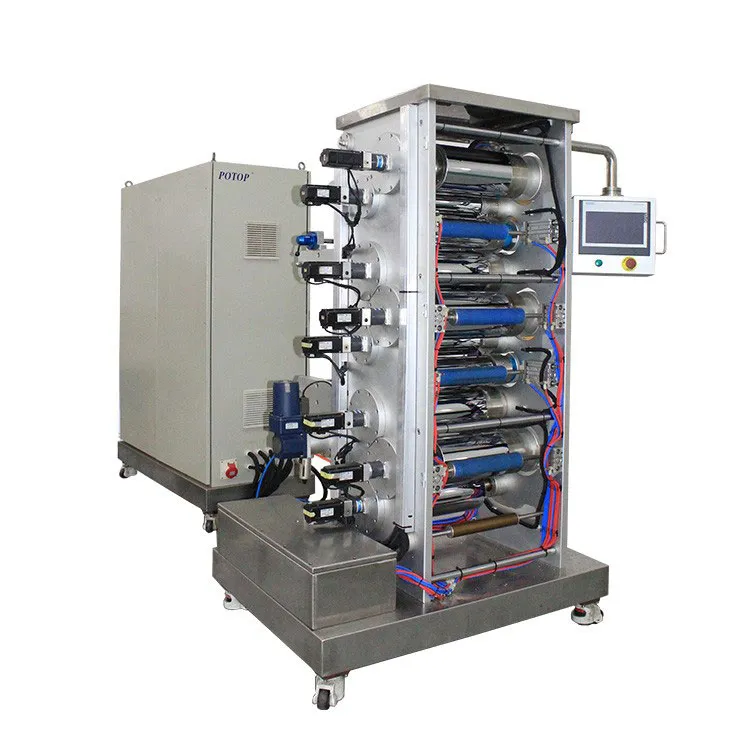


Twin-screw extruders are widely used for polymer compounding, masterbatch production, filler incorporation, reactive extrusion, devolatilization, recycling, and laboratory material development. However, twin-screw extrusion systems vary considerably in throughput, screw diameter, torque, screw configuration, feeding method, control system, and downstream equipment. A compact laboratory extruder designed for formulation trials cannot be evaluated by the same criteria as a continuous industrial compounding line.
This guide compares ten established twin screw extruder machine manufacturers serving laboratory, pilot-scale, and industrial applications. It outlines their main product capabilities, suitable applications, and important factors for procurement teams to consider.
The manufacturers were selected according to publicly available information from their official websites and product documentation. The main evaluation factors included:
Availability of identifiable twin-screw extruder models or product series
Laboratory, pilot, or industrial-scale equipment options
Screw and barrel configuration capabilities
Feeding, venting, pelletizing, and process-control options
Applications in compounding, recycling, masterbatch, or material research
Availability of technical product information
Ability to supply more than a basic standalone extruder
Editorial disclosure: POTOP publishes this article and is presented first because its laboratory twin-screw extrusion equipment is directly relevant to the intended readers of this website. The remaining companies are not presented as an absolute performance ranking. Final equipment selection should be based on material trials, technical specifications, production requirements, service capabilities, and commercial evaluation.
| Manufacturer | Main Equipment Scale | Representative Equipment | Main Applications | Particularly Suitable For |
|---|---|---|---|---|
| POTOP | Laboratory and pilot | Lab Twin Screw Pelletizer | Polymer modification, masterbatch, composites, R&D pelletizing | Universities, material laboratories and product development |
| Coperion | Laboratory to industrial | ZSK and STS series | Engineering plastics, masterbatch, recycling and battery materials | Large-scale and technically demanding compounding |
| Leistritz | Laboratory to industrial | ZSE series | Compounding, devolatilization, reactive extrusion and recycling | Configurable process-intensive extrusion lines |
| KraussMaffei Extrusion | Pilot and industrial | ZE BluePower | Plastics compounding and production extrusion | Modular industrial production systems |
| Japan Steel Works | Pilot and industrial | TEX series | Polymer compounding and high-volume production | Industrial plastics manufacturers |
| Thermo Fisher Scientific | Laboratory to pilot | Process 11, Process 16 and TSE 24 MC | Formulation, scale-up studies and small-batch production | Research laboratories requiring low material consumption |
| STEER World | Laboratory to industrial | Lab Series, OMega, mEGA and XLNT+ | Polymer compounding, specialty materials and recycling | Process-specific compounding configurations |
| Labtech Engineering | Laboratory and pilot | 12 mm twin-screw extruder and larger systems | Thermoplastic compounding and polymer evaluation | Research centers and laboratory-scale trials |
| USEON | Laboratory to large industrial | LAB, U+, SAT, EC and TDY series | Masterbatch, engineering plastics, recycling and sheet extrusion | Complete production lines across several capacity levels |
| Brabender | Laboratory and pilot | Twin-screw laboratory compounders | Material formulation, testing and small-batch compounding | Polymer development and quality-control laboratories |
Location: Guangzhou, China
Equipment focus: Laboratory polymer processing and testing equipment
POTOP develops laboratory and pilot-scale equipment for polymer extrusion, compounding, film processing, stretching, rheology testing, and material evaluation.
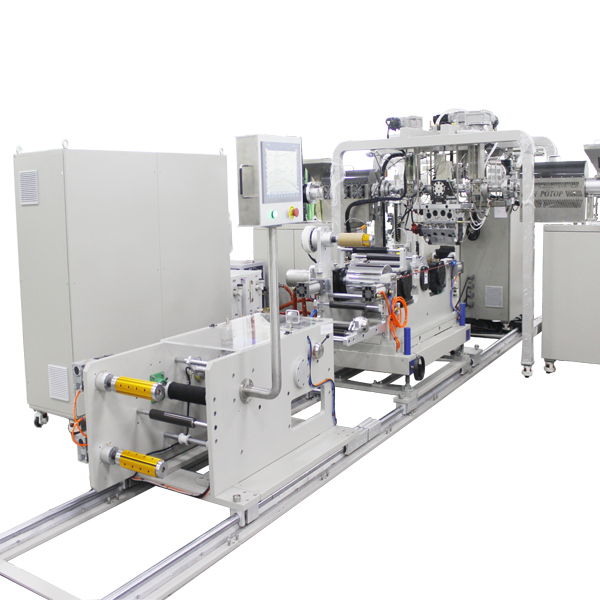
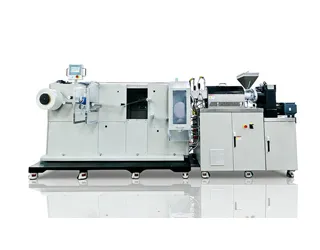
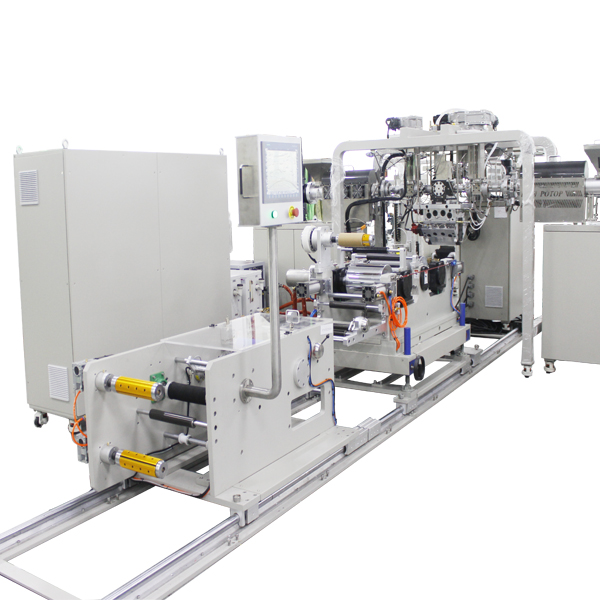
Its Lab Twin Screw Pelletizer is designed for polymer formulation development, filling, blending, modification, reinforcement, composite preparation, and experimental pellet production.
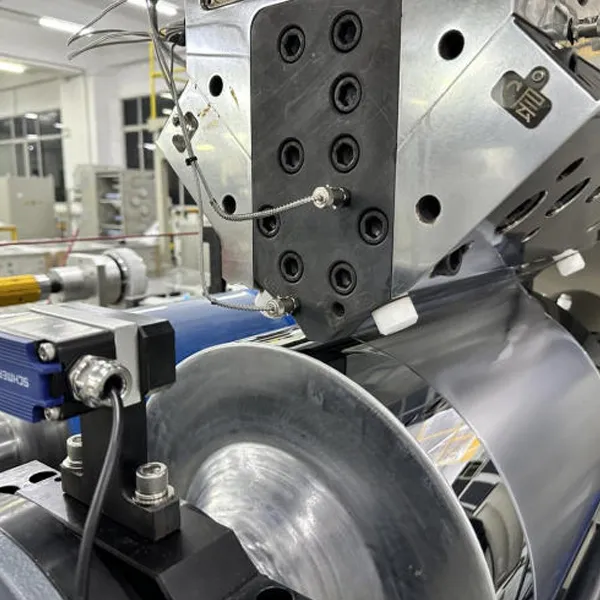
The system uses a modular screw configuration so that conveying, kneading, mixing, and exhaust elements can be adjusted for different formulations. A split barrel and quick-opening head facilitate cleaning, material observation, and screw-configuration changes between experiments.
Available configurations include:
16 mm and 21.7 mm screw diameters
Length-to-diameter ratio of 40
Maximum screw speeds of 300 or 600 rpm, depending on the model
Processing temperatures from room temperature to 350°C
Vacuum exhaust
Water-cooling system
PLC and human-machine interface
Real-time process data measurement
Optional melt pump
Strand cooling and pelletizing equipment
The machine can be used for thermoplastic compounding, masterbatch preparation, polymer reinforcement, carbon- or glass-fiber composites, and other material development programs. It is especially relevant when sample consumption, operating flexibility, cleaning access, and experimental data are more important than high-volume output.
Suitable for: Universities, polymer research institutes, corporate R&D centers, formulation laboratories, and manufacturers conducting pre-production material trials.
Important purchasing consideration: POTOP primarily focuses on laboratory and pilot applications. Buyers requiring continuous, high-output industrial compounding should confirm scale-up requirements and production capacity before equipment selection.
Location: Germany, with international manufacturing and service operations
Equipment focus: High-performance compounding and material handling systems
Coperion is a widely recognized manufacturer of co-rotating twin-screw extruders and complete compounding systems. Its extrusion portfolio includes the ZSK and STS product families.
The company’s ZSK twin-screw extruders are used for technically demanding compounding applications. The STS series provides modular systems for engineering plastics, masterbatch, cable compounds, recycling, powder coatings, bioplastics, and battery materials.
Available solutions range from laboratory equipment to large industrial production systems. Depending on the configuration, Coperion can integrate material feeding, side feeding, liquid addition, devolatilization, pelletizing, and automated process control.
Suitable for: Large compounders, engineering-plastics manufacturers, masterbatch producers, recycling companies, and facilities requiring an integrated processing line.
Important purchasing consideration: The configuration level and investment may exceed the needs of small laboratories or companies conducting only occasional formulation trials.
Location: Germany
Equipment focus: Modular co-rotating twin-screw extrusion systems
Leistritz manufactures twin-screw extruders for compounding, reactive extrusion, direct extrusion, devolatilization, and recycling.
Its ZSE MAXX and ZSE iMAXX product families are based on modular screw and barrel designs. The processing section can be configured according to material behavior, feeding sequence, mixing intensity, residence time, venting requirements, and downstream processing.
Leistritz also develops complete extrusion systems rather than limiting its scope to the extruder alone. This can include dosing, side feeding, filtration, degassing, pelletizing, and process-control equipment.
Suitable for: Polymer producers, specialty compounders, chemical companies, recycling operations, and manufacturers with process-specific configuration requirements.
Important purchasing consideration: A detailed material specification and process description are necessary to benefit from the platform’s configuration flexibility.
Location: Germany
Equipment focus: Industrial plastics extrusion and compounding systems
KraussMaffei Extrusion supplies extrusion technology for plastics and rubber processing. Its ZE BluePower platform is a co-rotating twin-screw extrusion system developed for industrial plastics processing.
The modular machine concept allows production systems to be configured around throughput, product quality, process reliability, wear resistance, and maintenance requirements. The equipment can be combined with upstream feeding and downstream production components.
KraussMaffei is particularly relevant to manufacturers seeking an industrial extrusion platform and broader production-line engineering support.
Suitable for: Industrial plastics processors, large compounders, manufacturers expanding production capacity, and companies requiring coordinated line engineering.
Important purchasing consideration: Procurement evaluations should include not only the extruder but also auxiliary equipment, plant integration, commissioning, operator training, and long-term spare-parts support.
Location: Japan
Equipment focus: Industrial plastics machinery and compounding extruders
Japan Steel Works supplies industrial plastics-processing machinery, including its TEX series of twin-screw extruders.
The company’s TEX III and TEX-αR equipment are designed for polymer compounding and production applications.
JSW systems are relevant to resin manufacturers, engineering-plastics producers, and other industrial users that require reliable continuous processing. Equipment configurations depend on the polymer, additive package, required throughput, feeding characteristics, and downstream pelletizing process.
Suitable for: Resin companies, engineering-plastics manufacturers, industrial compounders, and high-volume production plants.
Important purchasing consideration: Buyers should evaluate local technical support, lead time, factory acceptance testing, installation requirements, and compatibility with existing plant-control systems.
Location: United States, with global operations
Equipment focus: Laboratory and pilot-scale extrusion equipment
Thermo Fisher Scientific offers laboratory and pilot twin-screw extruders for polymer formulation, material characterization, process development, and scale-up studies.
The Process 11 parallel twin-screw extruder is designed for experiments with limited sample availability. Its published specifications include:
11 mm screw diameter
Length-to-diameter ratio of 40
Screw speeds up to 1,000 rpm
Throughput starting from approximately 20 g/h
Segmented screw configuration
Multiple temperature-control zones
Clamshell barrel access
Feeding, pelletizing, sheet, filament, and melt-pump options
The larger Process 16 and TSE 24 MC platforms support higher output and pilot-scale development.
Suitable for: Polymer laboratories, pharmaceutical development, universities, formulation teams, and companies working with expensive or limited materials.
Important purchasing consideration: The smallest system is optimized for research rather than commercial production. Scale-up should be evaluated through specific energy, residence time, temperature profile, screw geometry, and material behavior—not throughput alone.
Location: India, with international operations
Equipment focus: Twin-screw compounding platforms and processing technology
STEER World develops co-rotating twin-screw extrusion systems for polymer compounding and specialty-material processing.
Its equipment portfolio includes laboratory machines and industrial platforms such as OMega, mEGA, TITAN, XLNT+, and aLPHA. The XLNT+ platform is positioned as a standardized twin-screw extrusion system with integrated upstream and downstream equipment options.
STEER emphasizes screw-element design, mixing technology, process configuration, wear management, cleaning access, and automation. Different platforms address laboratory development, general compounding, specialty formulations, and higher-output production.
Suitable for: Masterbatch manufacturers, polymer compounders, recycling companies, specialty-material producers, and businesses evaluating process-specific screw configurations.
Important purchasing consideration: Manufacturers should compare the available platform’s specific torque, screw speed, free volume, wear protection, gearbox design, and service coverage for the intended application.
Location: Thailand
Equipment focus: Laboratory and pilot polymer-processing machinery
Labtech Engineering manufactures compact extrusion and polymer-processing equipment for laboratories and product-development facilities.
Its 12 mm twin-screw extruder is designed for thermoplastic compounding at low throughput. Published specifications include:
Screw speed from 0 to 800 rpm
Maximum barrel temperature of 400°C
Maximum output of approximately 4 kg/h for LDPE
Manual or computerized touchscreen control
Optional gravimetric feeding
Data downloading and processing capabilities
Labtech also offers larger twin-screw extruders and related laboratory lines for compounding, film blowing, cast film, sheet extrusion, and polymer evaluation.
Suitable for: Polymer laboratories, educational institutions, quality-control departments, and companies conducting small-scale compounding trials.
Important purchasing consideration: Buyers should confirm whether the selected machine provides the required feeder accuracy, venting arrangement, screw elements, pelletizing method, and scale-up relationship with the intended production extruder.
Location: Jiangsu, China
Equipment focus: Complete compounding and extrusion production lines
USEON manufactures twin-screw extruders for laboratory testing and industrial production.
Its portfolio includes:
LAB series for R&D and small-batch production
EC series for standard compounding applications
SAT series for industrial production
U+ series for higher-torque applications
TDY counter-rotating systems for selected heat-sensitive or low-shear processes
Applications include masterbatch, engineering plastics, thermoplastic elastomers, recycling, biodegradable compounds, cable materials, reactive extrusion, devolatilization, and direct sheet extrusion.
USEON also provides feeding, control, cooling, and pelletizing systems, allowing the extruder to be supplied as part of a complete production line.
Suitable for: Compounders seeking Chinese-manufactured industrial systems, masterbatch producers, recycling companies, and businesses requiring a complete extrusion and pelletizing line.
Important purchasing consideration: The specific series should be selected according to torque demand, screw speed, target output, raw-material form, filler content, abrasion level, temperature sensitivity, and pelletizing method.
Location: Germany
Equipment focus: Laboratory material testing and compounding equipment
Brabender supplies laboratory equipment for material characterization, extrusion, mixing, and formulation development.
Its twin-screw extrusion equipment is intended primarily for research, product development, quality control, and small-scale compounding rather than mass production. The company has also introduced larger development systems such as the Big Compounder.
Brabender equipment is often considered when the extrusion machine must be integrated with laboratory measurement, controlled feeding, torque monitoring, and material-testing workflows.
Suitable for: Research laboratories, universities, resin producers, formulation developers, and quality-control teams.
Important purchasing consideration: The system should be evaluated as a laboratory development platform. Industrial buyers requiring high continuous output should compare it with production-oriented extrusion manufacturers.
The appropriate manufacturer depends first on the required equipment scale.
Laboratory machines are used for:
New polymer formulation development
Small-batch masterbatch preparation
Additive screening
Composite-material trials
Processability evaluation
University research
Scale-up data collection
Important factors include minimum batch size, cleaning access, screw-change time, data acquisition, feeding accuracy, and compatibility with downstream laboratory equipment.
Pilot systems connect laboratory development with commercial production. They provide higher output while retaining configuration flexibility.
Typical uses include:
Customer material trials
Pre-production validation
Limited specialty-material production
Process-window studies
Scale-up verification
Downstream equipment development
Industrial systems are designed for continuous production and must be evaluated according to:
Required hourly output
Operating schedule
Product consistency
Energy consumption
Wear resistance
Maintenance intervals
Automation level
Downstream integration
Spare-parts availability
A manufacturer strong in laboratory equipment is not automatically the best supplier for a large production plant, and an industrial-line specialist may not provide the material efficiency required for early-stage R&D.
In a co-rotating system, both screws rotate in the same direction. Intermeshing co-rotating extruders are widely used for:
Polymer compounding
Masterbatch production
Filler dispersion
Fiber reinforcement
Polymer blending
Reactive extrusion
Devolatilization
Recycling and upcycling
They generally provide intensive distributive and dispersive mixing and allow the process to be modified through different screw elements.
In a counter-rotating system, the screws rotate in opposite directions. These machines may be selected for applications requiring controlled conveying, lower shear, or positive-displacement behavior.
Applications can include:
Heat-sensitive compounds
Certain PVC formulations
Specialized extrusion processes
Low-shear conveying
Loose or difficult-to-feed materials
Neither design is universally superior. The correct choice depends on material rheology, thermal sensitivity, mixing requirements, target output, and product form.
The required machine configuration changes depending on whether the process involves simple blending, pigment dispersion, mineral filling, fiber reinforcement, reactive extrusion, devolatilization, recycling, or direct extrusion.
A clear process description should be prepared before requesting quotations.
The manufacturer should receive information about:
Base polymer
Additive and filler types
Filler percentage
Bulk density
Moisture content
Particle or fiber form
Temperature sensitivity
Abrasiveness
Corrosiveness
Required final product
Material information allows the supplier to evaluate feeding, screw design, metallurgy, venting, and motor requirements.
Screw diameter influences potential output but cannot be evaluated independently. The length-to-diameter ratio affects residence time and the number of available processing zones.
Longer barrels can provide more space for feeding, mixing, venting, reaction, and pressure development, but unnecessary length may increase energy consumption and thermal history.
Torque and screw speed affect throughput, mixing intensity, melt temperature, and processing flexibility.
A high numerical value is not automatically better. The required operating window depends on the formulation and the permitted shear and temperature exposure.
Modular screw elements may include:
Conveying elements
Kneading blocks
Reverse elements
Mixing elements
Sealing elements
Pressure-building sections
The manufacturer should explain how the proposed configuration supports feeding, melting, dispersion, distribution, venting, and discharge.
Many extrusion problems begin before the material reaches the screw.
The quotation should specify:
Main feeder type
Gravimetric or volumetric control
Side-feeder position
Liquid-injection system
Atmospheric venting
Vacuum venting
Powder containment
Feed-zone cooling
Low-bulk-density powders, fibers, flakes, liquids, and high-filler formulations may require different feeding solutions.
An extruder does not automatically produce finished pellets. A complete pelletizing line may require:
Strand die
Cooling bath
Air knife
Strand pelletizer
Water-ring pelletizer
Underwater pelletizer
Vibrating dryer
Pellet classifier
Melt filter or screen changer
Melt pump
The pelletizing method should be selected according to melt strength, output, material sensitivity, and pellet-quality requirements.
Whenever possible, a representative formulation should be tested before purchase.
The trial report should document:
Material formulation
Feed rate
Screw speed
Barrel temperature profile
Motor load
Torque
Melt pressure
Melt temperature
Output
Pellet appearance
Dispersion or final-product test results
A successful demonstration with unrelated material provides limited evidence.
Procurement teams should confirm:
Factory acceptance test procedures
Installation responsibilities
Commissioning support
Operator training
Spare-parts availability
Remote diagnostic capabilities
Warranty scope
Response time
Process support after delivery
For laboratory systems, the manufacturer should also explain how test results can support pilot or production-scale development.
A technical inquiry should include the following questions:
Is the proposed extruder co-rotating or counter-rotating?
What screw diameter and L/D ratio are recommended?
What output range is expected for the actual formulation?
What is the available screw-speed range?
Which screw elements are included?
Can the screw configuration be changed?
What feeder is recommended for each ingredient?
Is side feeding required?
How many venting or vacuum ports are included?
Which barrel and screw metallurgy is proposed?
What downstream pelletizing system is recommended?
Which process parameters can be recorded and exported?
Can a material trial be conducted before purchase?
What utilities and installation space are required?
Which spare parts should be ordered with the machine?
What commissioning and training services are included?
A twin-screw extruder uses two rotating screws inside a heated barrel to convey, melt, mix, react, vent, and pressurize materials. It is commonly used for polymer compounding, masterbatch, recycling, composites, reactive processing, and specialty-material production.
Manufacturers serving this market include POTOP, Coperion, Leistritz, KraussMaffei Extrusion, Japan Steel Works, Thermo Fisher Scientific, STEER World, Labtech Engineering, USEON, and Brabender. Their equipment differs substantially in capacity and intended application.
There is no single best manufacturer for every project. POTOP, Thermo Fisher Scientific, Labtech Engineering, and Brabender focus strongly on laboratory or pilot applications, while Coperion, Leistritz, KraussMaffei, JSW, STEER, and USEON offer broader industrial production solutions.
The best supplier is the one that can demonstrate a suitable process configuration using the intended formulation and production conditions.
The extruder performs conveying, melting, mixing, venting, and pressure generation. A pelletizing line combines the extruder with feeding, cooling, cutting, drying, classification, and control equipment to produce finished pellets.
Depending on its configuration, a twin-screw extruder can process thermoplastics, elastomers, biodegradable polymers, engineering plastics, masterbatch, recycled materials, mineral-filled compounds, fiber-reinforced composites, and reactive formulations.
Processing capability must be confirmed for each material because temperature sensitivity, viscosity, filler loading, abrasion, and feeding behavior vary.
Laboratory screw diameters commonly fall within a compact range, but screw diameter alone does not determine suitability. Minimum feed rate, sample consumption, torque, screw speed, L/D ratio, cleaning access, feeder accuracy, and downstream equipment must also be considered.
Laboratory results provide valuable process information, but production settings cannot normally be increased through a simple linear calculation. Scale-up should consider screw geometry, specific energy, residence time, heat-transfer area, feeding behavior, melt temperature, torque utilization, and downstream cooling capacity.
Pricing depends on screw diameter, torque, motor capacity, barrel length, metallurgy, feeders, vacuum system, automation, pelletizing method, and auxiliary equipment. Laboratory machines and complete industrial lines occupy very different investment ranges.
A useful quotation should therefore be based on material, output, process, and final-product requirements rather than machine size alone.
The inquiry should include the complete formulation, material form, filler percentage, target output, operating hours, final product, pelletizing method, available utilities, required control system, and relevant safety or factory standards.
Choosing among twin screw extruder machine manufacturers requires more than comparing screw diameter and maximum output.
Laboratory buyers should prioritize sample efficiency, flexible screw configurations, cleaning access, feeder accuracy, process-data collection, and compatibility with downstream research equipment. Industrial buyers should place greater emphasis on torque capacity, operating stability, wear protection, automation, maintenance, and production-line integration.
For universities, research institutes, and polymer manufacturers conducting laboratory compounding or pilot pelletizing trials, POTOP’s Lab Twin Screw Pelletizer provides configurable screw elements, controlled feeding and venting, real-time data monitoring, and integrated strand pelletizing options.
Organizations evaluating a laboratory twin-screw extrusion system can contact POTOP with the intended formulation, target output, material characteristics, and experimental objectives to discuss an appropriate equipment configuration.
Last updated: September 15, 2026.